
Street photography records ordinary public life before it has time to arrange itself. As wall art, the strongest images bring a sense of place and timing into a room without making the wall feel like a travel poster.
Street photography is often described as photography made in public places, but the location is only part of it. The real subject is the unplanned relationship between people, weather, light, buildings and movement.
A reflection appears after rain. A bus crosses a familiar view at exactly the right moment. Someone steps into a patch of light, then the scene is gone. The photographer notices the small order inside that brief piece of everyday life.
What is street photography?
Street photography is observational rather than staged. It does not need to show a crowded pavement or a stranger’s face. Architecture, shadows, reflections, transport and traces of human activity can all carry the story.
That is why the genre is broader than the name suggests. A quiet station before rush hour can be street photography. So can a wet bridge, a shop window at dusk or the shape of a person crossing a large public square. The common thread is attention to real life as it happens.
The best street photographs usually hold two things at once: a specific place and a moment that could not be repeated in quite the same way. That small tension gives the image more life than a perfectly arranged scene.
Why can street photography work as wall art?
A photograph on a wall needs to do more than reward a quick look. You will see it in different light, from different distances and on ordinary days. Street photography can handle that repetition because it often contains layers that reveal themselves slowly.
From across the room, you might first notice a dome, bridge or line of light. Closer up, the rain on the pavement or a passing vehicle becomes part of the picture. The subject stays clear, but the smaller details keep the print from feeling flat.
This is also why a quieter street photograph can suit a home better than the busiest one. Energy is useful. Clutter is not. The image should give the eye somewhere to settle.
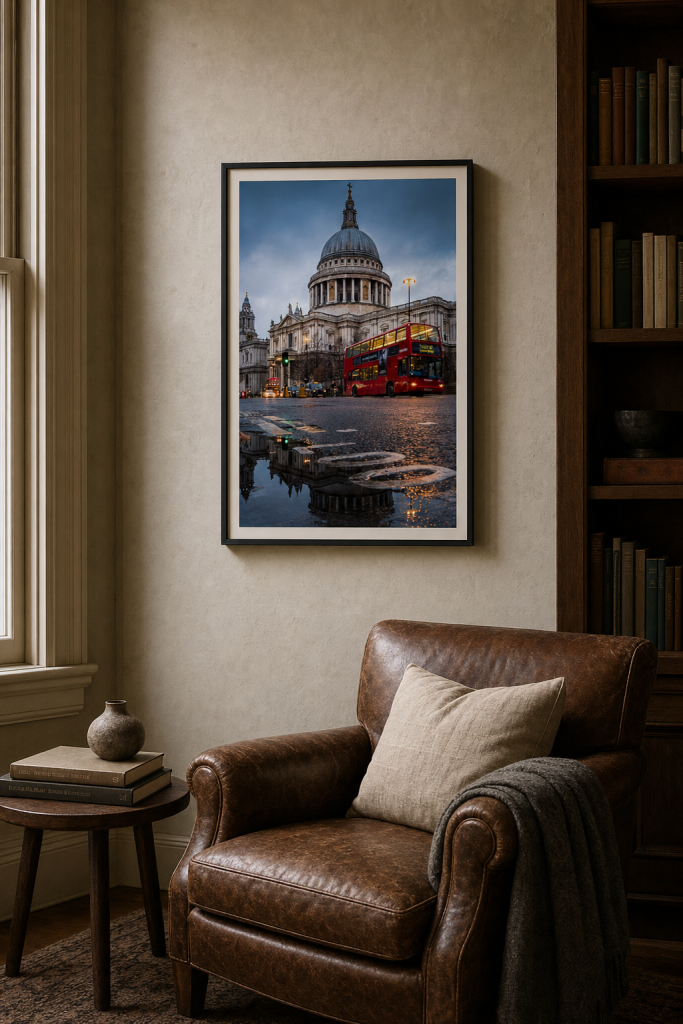
Placed in a quiet interior, the movement becomes a point of interest rather than background noise.
Look for structure before activity
Busy streets do not automatically make strong prints. A photograph can contain people, traffic and signs yet still feel controlled when one shape holds everything together. That anchor might be a building, a reflection, a bright window or a line through the frame.
A clear anchor
Look for one element you can recognise from across the room. It gives the smaller street details a place to gather around.
Useful empty space
Sky, pavement, shadow or a plain wall can stop an active scene from becoming tiring.
Controlled colour
One warm light or restrained red accent can carry more weight than a frame filled with competing colour.
If you are choosing a London image, the guide to atmospheric architecture photography in London shows how weather, viewpoints and quieter details can change a familiar landmark.
Choose the mood you want to live with
Street photography can feel restless, cinematic, graphic, lonely or calm. Start with the room rather than the fame of the location.
For a living room, an image with a strong landmark and measured activity can add character without taking over. In a hallway, a vertical street scene can suit the natural direction of movement. A study can hold something denser because you tend to see it from closer range.
Black and white removes some of the visual noise and makes shape more obvious. Colour keeps small pieces of atmosphere, such as wet amber light or the red of a London bus. Neither is automatically calmer. The composition matters more than the treatment.
If the room already contains several patterns, choose a street photograph with a simple silhouette or broad area of sky. For a quieter neutral room, a little movement or contained colour can stop the wall feeling overly careful. The broader guide to choosing living room wall art can help with scale and placement.
Think about orientation and framing
Vertical street photographs suit narrow wall sections, spaces between doors and the ends of hallways. A wider image feels more settled above a sofa, desk or sideboard. Do not force a favourite photograph into the wrong shape. Let the original composition decide where it belongs.
A slim black frame often supports city photography because it repeats the dark lines already present in windows, railings and architecture. A pale mount can give a dense image more breathing room. The frame should finish the photograph, not turn it into decoration. See the practical guide to choosing framed photography prints for a fuller comparison.
Two street-led London prints
These photographs use familiar landmarks, but the weather and street-level viewpoint keep them grounded in a real moment.
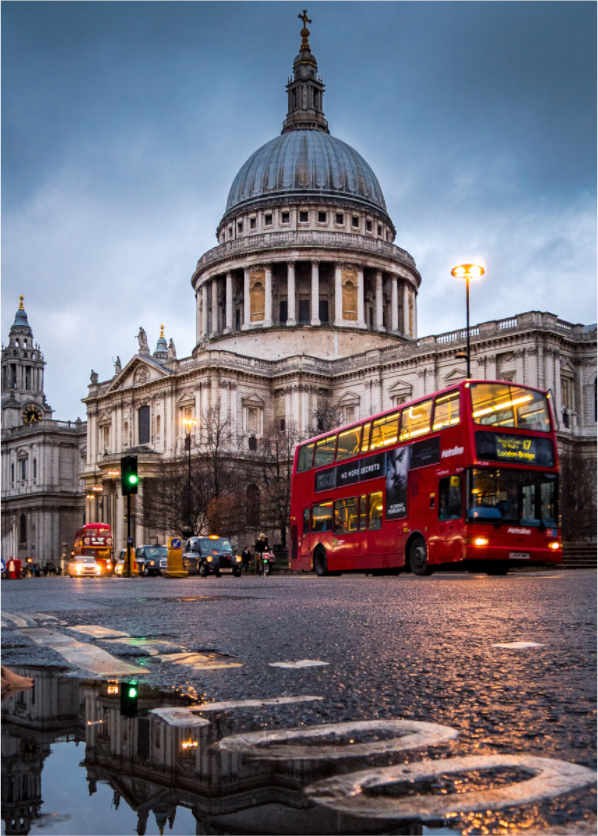
St. Paul’s Cathedral at Dusk
A rain reflection, a passing red bus and a familiar dome held inside one restrained London scene.
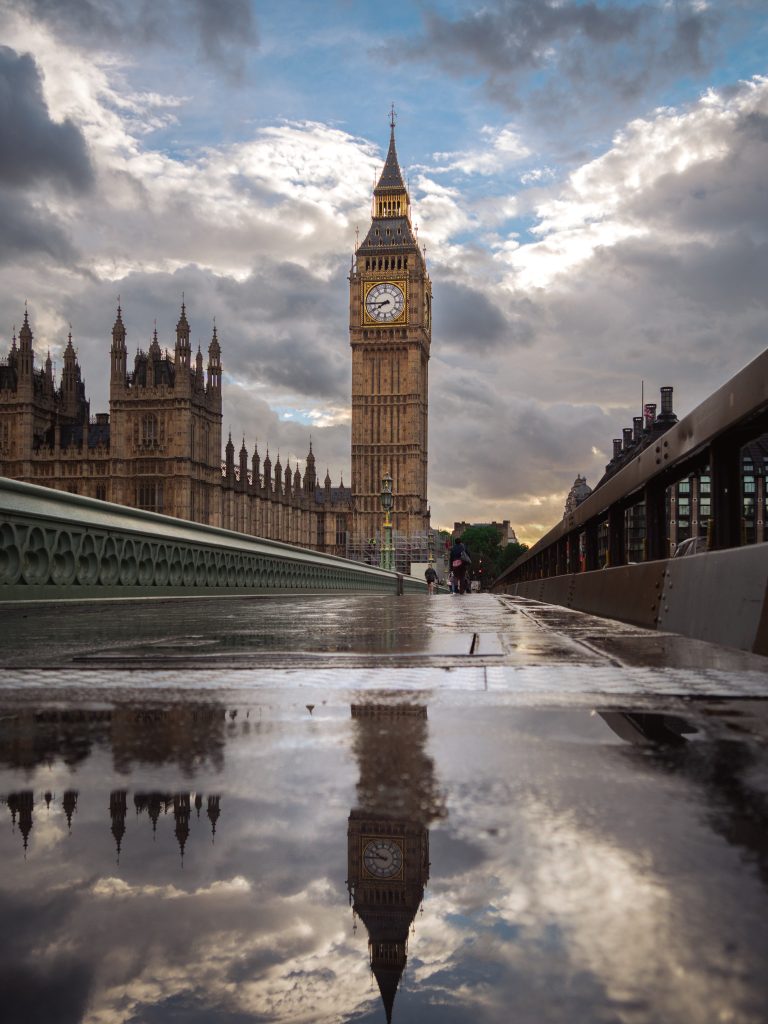
Big Ben After Rain
A low viewpoint and reflective pavement turn Westminster into a quieter, more atmospheric street-level view.
Choose the moment, not just the landmark
The difference between a generic city picture and a street photograph worth living with is often the moment around the subject. Rain, reflection, a brief movement or an unusual line can make a familiar place feel personal again.
Choose the image that keeps giving you something to notice. The location may start the conversation, but the atmosphere is what stays on the wall.
Explore London photography prints
Browse photographs shaped by real weather, changing light and the quieter structure of the city.