
A home collection does not need a collector's vocabulary or a wall full of purchases. It can begin with one photograph that earns its place, then grow slowly through clear choices about mood, subject, scale and where each work will live.
Choose an anchor work
Start with the photograph you would keep if the rest of the room changed. It may connect to a place, but it can also hold your attention through light, shape or atmosphere. An anchor work gives later decisions something concrete to answer.
Place it where you naturally pause, then live with it before buying the second piece. Notice whether you respond most to architecture, open landscape, street detail, warm colour or monochrome. The aim is not to invent a theme. It is to discover the visual qualities you already return to when no one is asking you to define your taste.
Set limits that protect the choices
A useful collection has practical boundaries. Decide how much wall space is genuinely available, what sizes the rooms can support and what you are comfortable spending over time. Measure frames and note where direct sun, heat or moisture make a location unsuitable.
These limits stop browsing from becoming random accumulation. They also make the search more interesting. A narrow wall may lead you toward a vertical photograph; a long sightline may suit a horizontal image with open distance. Constraints can produce a more coherent home than trying to keep every option open.
Collect a visual thread, not matching sets
Coherence does not require identical frames, one subject or a single colour palette. Look for a quieter thread. Two photographs might share patient light, strong geometry, generous negative space or a feeling of weather. One can be a London street and another an empty horizon while still belonging together.
Exact matches can feel like a furniture package, especially when bought at once. A collection feels more personal when the relationships are visible but not perfect. Write one sentence about why each work belongs. If the sentence only says it matches the sofa, wait before adding it.
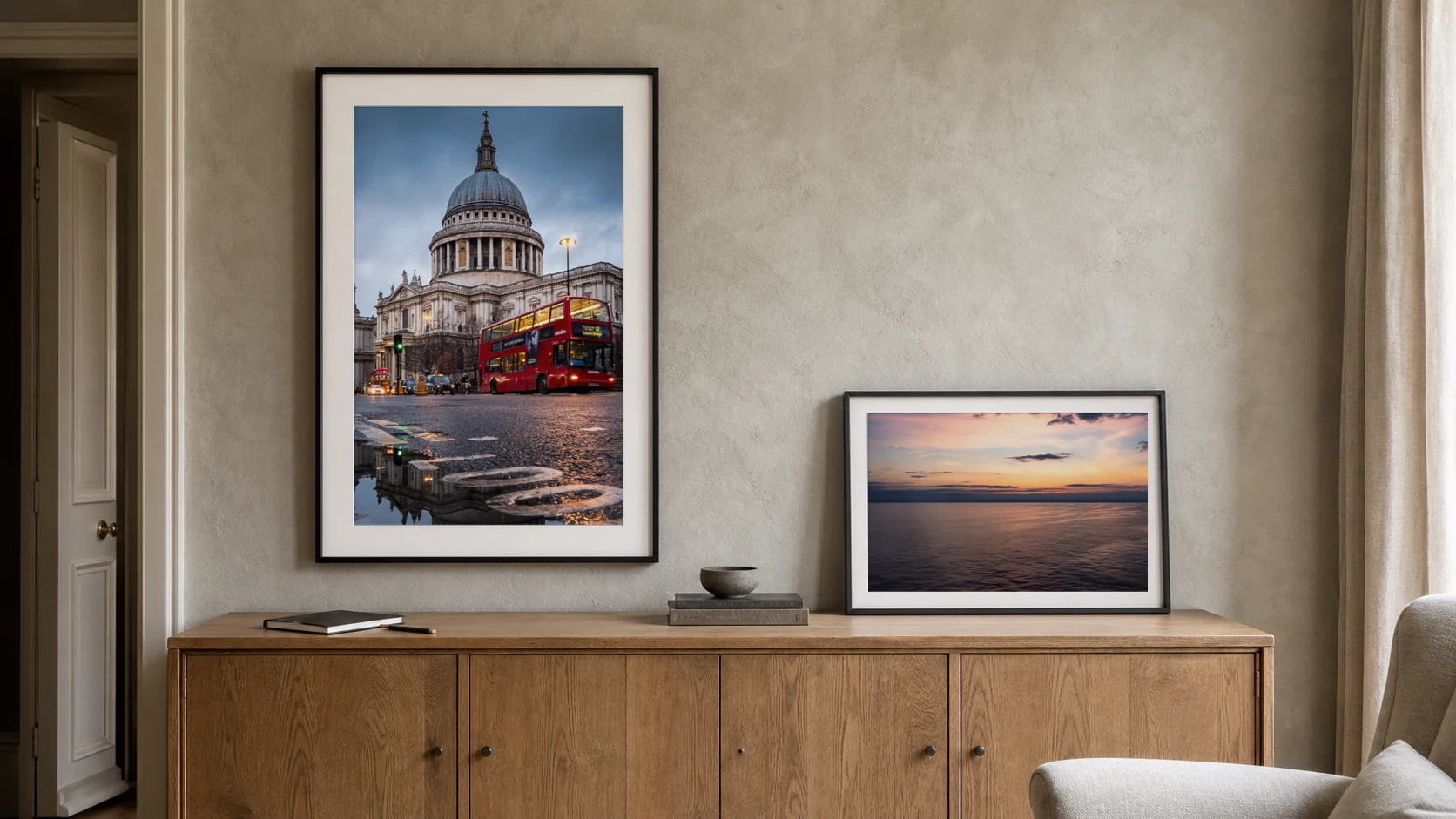
The portrait city scene acts as the anchor while the smaller seascape introduces a second direction. Their twilight light connects them, but the open wall keeps the collection visibly unfinished.
Keep a simple record
Save the product title, photographer or maker, purchase date, image size, overall frame size and the wall where the work currently hangs. Photograph the label or receipt if useful. This is not about turning a small home collection into an archive.
It prevents confusion when you move, reframe or add another print. A note about what first drew you to the photograph can also be valuable. Over time, that record shows whether your choices are becoming more precise or simply repeating the same safe image.
Move work before buying more
A photograph can change when it moves from a hallway to a bedroom or from a dark corner to an open living room. Before deciding that a wall needs another purchase, test an existing work there. The move reveals whether the issue is subject, scale, orientation or light.
It can also expose connections between pictures that were separated. Collections develop through editing as much as adding. Leaving one wall empty is a valid decision when the existing images already carry the home.
Let the collection remain unfinished
An unfinished collection can be a sign of attention rather than lack. Search slowly, revisit photographs and allow a place or image to matter before bringing it home. There is no need to complete a gallery wall in one order.
A pair assembled months apart may feel more convincing because each work survived a separate decision. The goal is not quantity or proof of expertise. It is a group of photographs that keeps rewarding ordinary looking as the light, rooms and your own preferences change.
Review the group once a year
Once a year, walk through the home and look at the photographs as a group. Check condition, direct light, frame stability and whether each position still makes sense. Move a work if it has become invisible through familiarity or if a room now needs a different pace.
This review is also a chance to notice what the collection lacks. The answer may be more colour, more quiet, a vertical shape or nothing at all. Do not turn the review into a reason to buy. Its purpose is to keep the existing work visible and cared for, and to make any future addition answer a real need.
Two real print directions
These two current Othervariant photographs show how the decision can lead to different subjects without losing clarity. Use the product pages to compare the full image, available presentation and the shape of the work.
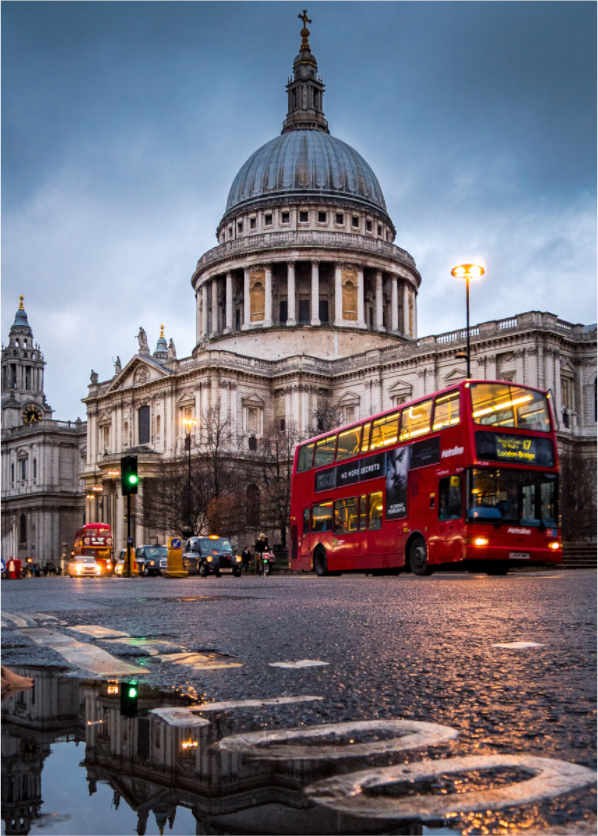
St. Paul's Cathedral at Dusk — London Street Photography Print
Street light, a red bus and St Paul's create a specific city anchor with warmth and movement.

Crossing at Dawn — English Channel Seascape Photography Print
A soft horizon and open negative space provide a quieter counterpoint without trying to match the city scene.
For a broader decision sequence, read the guide to choosing photography art for your home before measuring the final position.
Choose the photograph before filling the wall
Compare the image, room and scale slowly. The current collection is available to browse without urgency.