
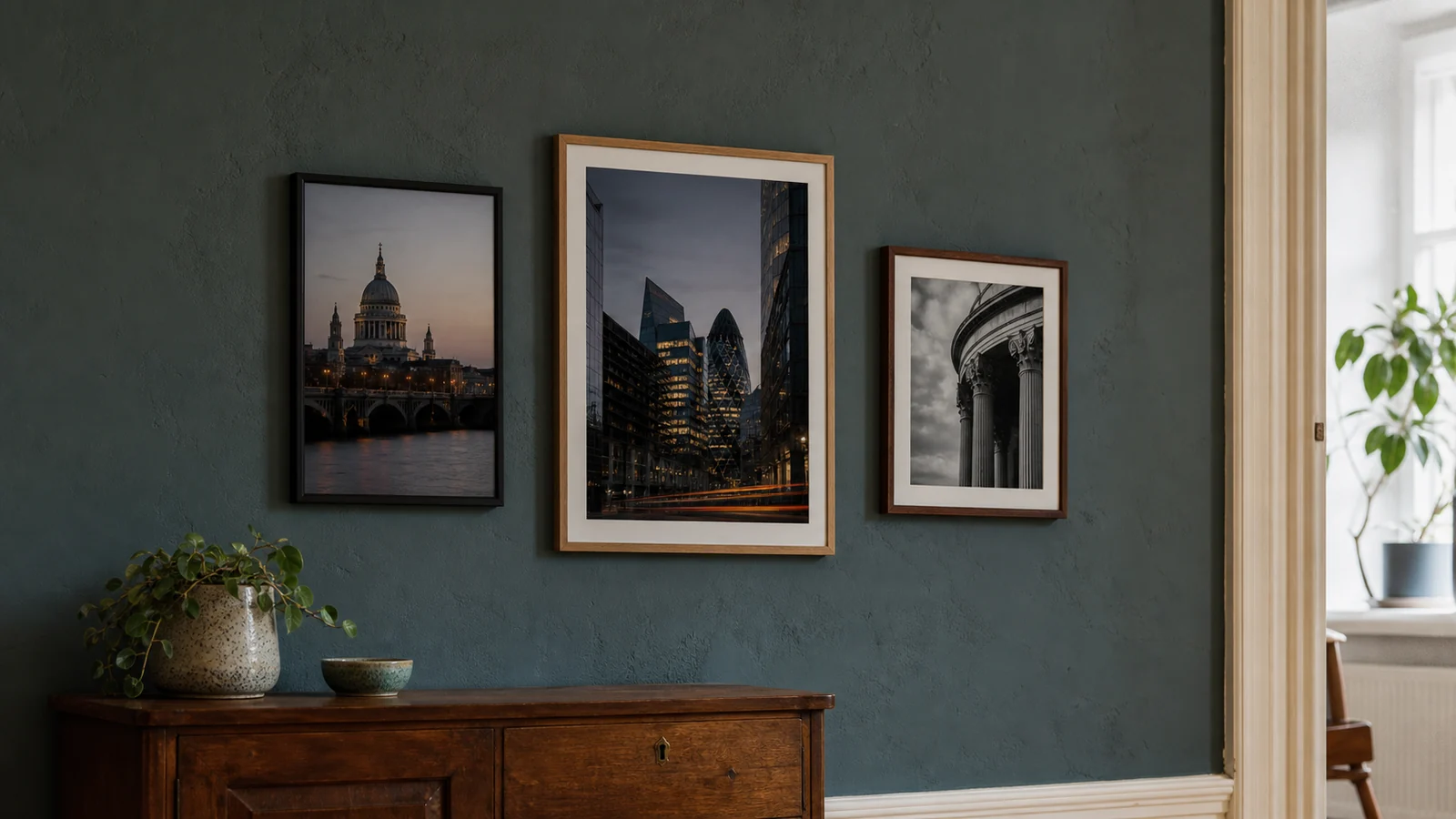
Framed photography prints do not need much maintenance. They need gentle dusting, stable light and moisture, and one simple rule: clean the glazing, not the photograph.
A framed photograph can look after itself for years when it is left in a sensible place. Most damage comes from trying to clean too much, hanging it in strong direct sun, or letting moisture work its way behind the glazing.
The aim is not to make the frame spotless every week. It is to remove loose dust without disturbing the paper, mount or finish. A quiet routine is safer than a deep clean.
How to care for framed photography prints
Start by looking at how the print is framed. Glass and acrylic glazing need slightly different care. Wood, painted and metal frames can also react differently to damp cloths and cleaning products. If the framer supplied care instructions, follow those first.
For routine dust
Use a clean microfibre cloth, a soft natural-bristle brush or a hand blower. Work across the top edge first, then the front and sides. Support the frame while you clean it rather than pressing it against the wall.
For marks on glazing
Take the frame down. Put cleaner on the cloth, never directly on the glass or acrylic. Use very little liquid and keep it away from the frame edges, where it could reach the mount or photograph.
Do not clean the photograph itself
If a print sits behind glazing, there should be no reason to touch its surface. Fingerprints can leave oils behind. Rubbing can change the sheen of the paper, lift pigment or make a small mark worse.
If dust, mould, moisture or an insect has reached the photograph, stop before taking the frame apart. A professional framer or photograph conservator can inspect it without guessing. The Library of Congress has a useful guide to caring for photographic materials, including advice on handling, storage and environmental conditions.
If the mark is behind the glazing, cleaning the front will not solve it. That is the point to ask a framer, not press harder.
Keep water away from the edges
Spraying glass while the frame is upright looks convenient. It also lets cleaner run towards the bottom edge. From there, moisture can move behind the glazing and into the mount or backing board.
Place the frame face-up on a clean, padded surface. Check that the hanging wire or fittings cannot scratch the table. Clean the glazing with a barely damp cloth, then use a dry cloth to remove any remaining streaks. For acrylic glazing, avoid ordinary glass cleaners unless the manufacturer says they are safe. Some products can leave acrylic cloudy or scratched.
Light matters more than frequent cleaning
Dust is visible, so it gets attention. Direct sunlight is quieter. It can change a print slowly, especially when the same wall receives strong light for several hours each day.
Hang photography where daylight is indirect when possible. A bright room is not automatically a problem. The harder condition is a concentrated beam moving across the print every day. If the only suitable wall gets direct sun, ask a framer about glazing with ultraviolet filtering and remember that no glazing removes every risk.
Humidity matters too. Kitchens and bathrooms can change quickly as steam rises and settles. If a frame repeatedly fogs inside, feels damp at the back or starts to bow, move it to a more stable room and have it checked.
How to move and store a framed print
Lift a framed print with two hands from the sides. Do not carry it by the hanging wire. Before moving house, protect the corners, cover the front with clean card, and keep the frame upright rather than laying heavy boxes on top.
For longer storage, choose a dry interior space with a steady temperature. Avoid lofts, sheds, garages and outside walls that feel damp. Keep framed work raised from the floor. If an unframed print needs storing, use archival materials and avoid rolling it tightly unless the printer or framer recommends that method.
| What you notice | Safest response |
|---|---|
| Loose dust on the frame | Use a soft, dry cloth or brush. |
| Fingerprints on glass | Clean the glazing with liquid applied to the cloth. |
| Cloudy acrylic | Stop using glass cleaner and check the acrylic care instructions. |
| Moisture inside the frame | Move it to a dry room and contact a framer. |
| A mark on the print | Do not rub it. Ask a framer or conservator. |
Two prints with different surfaces and tones
Dark architecture and pale landscapes show marks differently, but the care is the same. Protect the paper, keep liquid outside the frame, and let the photograph stay untouched.

The Shard from Sky Garden
A monochrome skyline with dark tones where clean glazing and careful placement help the detail stay clear.

Light Break
A pale seascape with open sky and softer tones, suited to calm rooms away from repeated steam or direct sun.
A simple care routine is enough
Check the frame when you dust the room. Look for loose fittings, moisture, insects or a change in the paper. Clean the glazing only when it needs it. The photograph should stay sealed, supported and untouched.
If you are still choosing the presentation, the guide to framed photography prints explains frame colour, mounts and room fit. The guide to fine art photography prints covers the print itself.
Choose photography worth looking after
Explore quiet architecture, landscape and monochrome prints made for real rooms.