

Choosing wall art together becomes difficult when the conversation starts with labels such as modern, traditional or colourful. A better route is to agree what the room needs, then compare photographs using visible qualities rather than defending complete styles.
Agree on the room before the image
Ask what the room should feel like during normal use. Calm, focused, open, warm and structured are more useful answers than good or stylish. Each person can choose three words, then look for overlap.
If one wants energy and the other wants quiet, a photograph with strong geometry and restrained colour may satisfy both. If one prefers nature and the other architecture, the shared quality might be distance, symmetry or subdued light. This changes the decision from winning a taste argument to solving a room together.
Separate subject from visual behaviour
People often reject a subject before seeing how differently it can be photographed. London can be colourful and busy, or reduced to shadow and a single vertical form. A seascape can be decorative blue, or nearly abstract light and horizon.
Describe what the image does: does it pull forward, create distance, hold a clear centre or spread across the wall? This language reveals compromises that style categories hide. You may disagree about landmarks but agree on negative space, or disagree about colour but both prefer photographs that read cleanly from across the room.
Make two small shortlists
Each person should choose no more than three photographs and explain the choice in one sentence. The explanation must connect the image to the room rather than to a general rule. Compare the lists and remove anything either person strongly dislikes.
From what remains, identify shared features. A shortlist keeps the discussion specific and avoids endless browsing. It also gives quieter preferences equal weight. One person should not have to accept a dominant image simply because the other can argue for it more confidently.
Test scale and location together
A disagreement about a photograph may really be a disagreement about how much visual weight it will have. Mark the outer frame on the wall and view it from the doorway, sofa or desk.
A bold image at a modest size can feel contained; a quiet image at a larger size can create presence without noise. Consider whether the work is seen mainly by both people or sits in a more personal area. Shared spaces need a shared decision, while a study corner or bedside wall can hold a more individual preference.
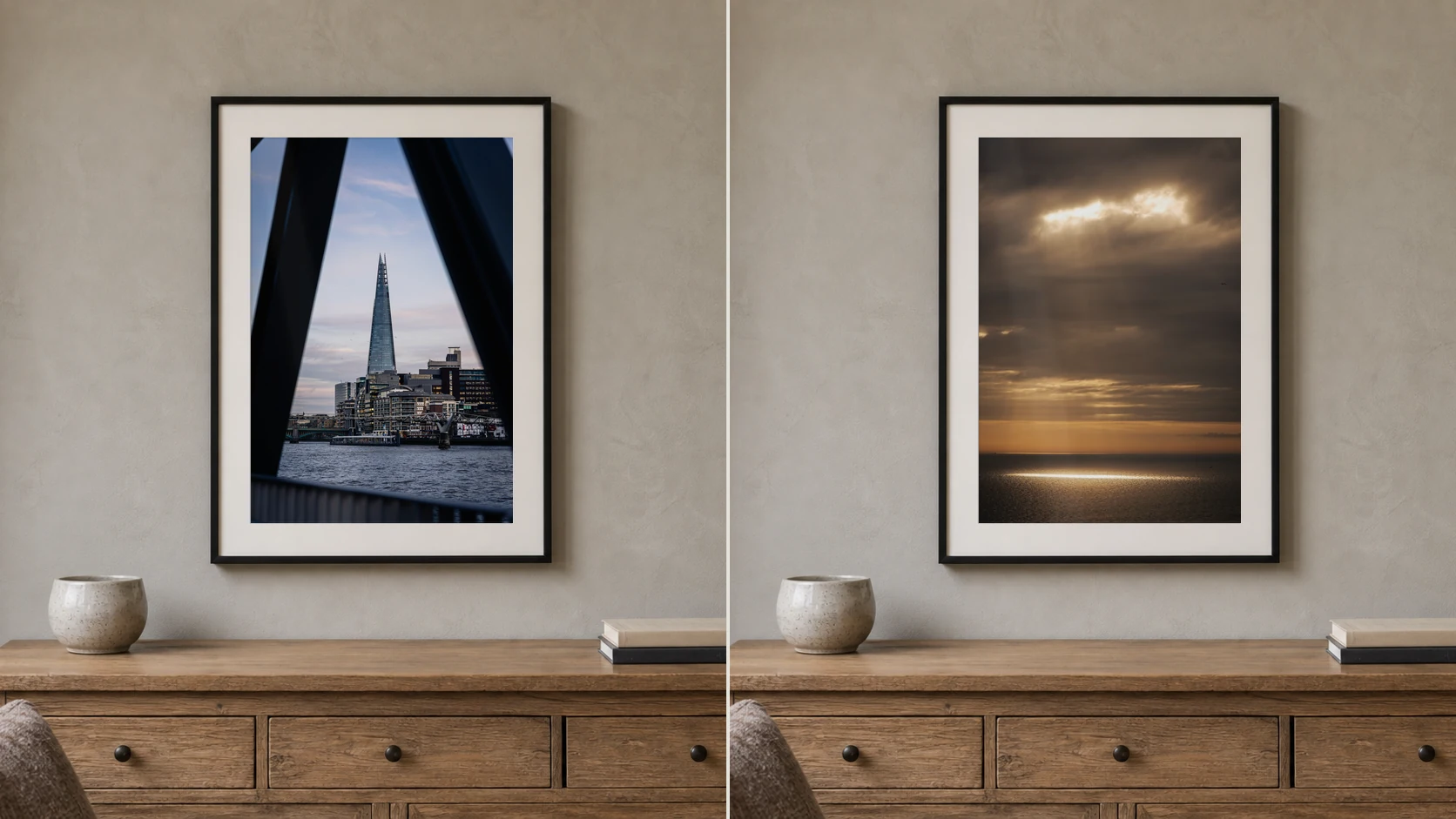
Because the room does not change, each reaction can stay attached to the image itself. One choice brings tighter architectural contrast; the other creates a quieter coastal distance.
Use framing as a bridge, not a disguise
A simple frame can help a photograph sit with different furniture and tastes, but it should not be used to make an unwanted image acceptable. First agree on the picture. Then compare a restrained black, white or natural wood frame against materials already in the room.
Repeating one existing finish can make an unfamiliar subject feel connected. Avoid adding ornate or strongly coloured framing as another compromise layer. Too many negotiated details can leave both people dissatisfied.
Leave time between shortlist and purchase
Return to the final two choices after a day. Look at them in morning and evening light on the screens you normally use, then imagine each at the measured scale. Ask which image you are both curious to keep seeing, not which one causes the least objection.
A shared home does not need neutral decisions everywhere. It needs decisions with enough room for both people. If neither photograph feels right, keep the wall empty and continue looking rather than buying a compromise that will be replaced quickly.
Create a decision both people can repeat
Keep the method for later rooms. Start with three room words, shortlist separately, describe visible qualities and test the final options at real scale. A repeatable process matters because one successful compromise does not settle every future choice.
It also prevents old arguments from being carried into a new room. Over time, the shared home may develop its own visual language, one that neither person would have chosen alone. That is a stronger result than alternating complete control or filling common walls with images so neutral that nobody cares about them. Shared taste can be built through attention rather than discovered fully formed.
Two real print directions
These two current Othervariant photographs show how the decision can lead to different subjects without losing clarity. Use the product pages to compare the full image, available presentation and the shape of the work.

Shard Between Shadows — London Architecture Photography Print
Vertical structure, deep shadow and a pale sky offer city subject matter without a busy postcard treatment.

Light Break — Seven Sisters Seascape Photography Print
A vertical coastal view brings softer atmosphere while retaining a clear, restrained composition.
For a broader decision sequence, read the guide to choosing photography art for your home before measuring the final position.
Choose the photograph before filling the wall
Compare the image, room and scale slowly. The current collection is available to browse without urgency.