
Mountains look enormous in front of you and strangely small in a photograph. Good mountain photography depends on showing scale, separating the layers and letting the weather remain part of the place.
The most useful mountain photography tip is to stop treating the summit as the whole picture. A mountain needs context. Foreground, distance, cloud and a familiar object can help the viewer understand what standing there actually felt like.
You do not need dramatic equipment or dangerous access. You need a clear subject, enough patience for the land to separate into layers, and the judgement to leave when the conditions are no longer safe.
Give the mountain something to stand against
A bare mountain filling the frame can lose its size because the viewer has nothing familiar to compare it with. Include a road, building, boat, tree or person when it belongs naturally in the scene.
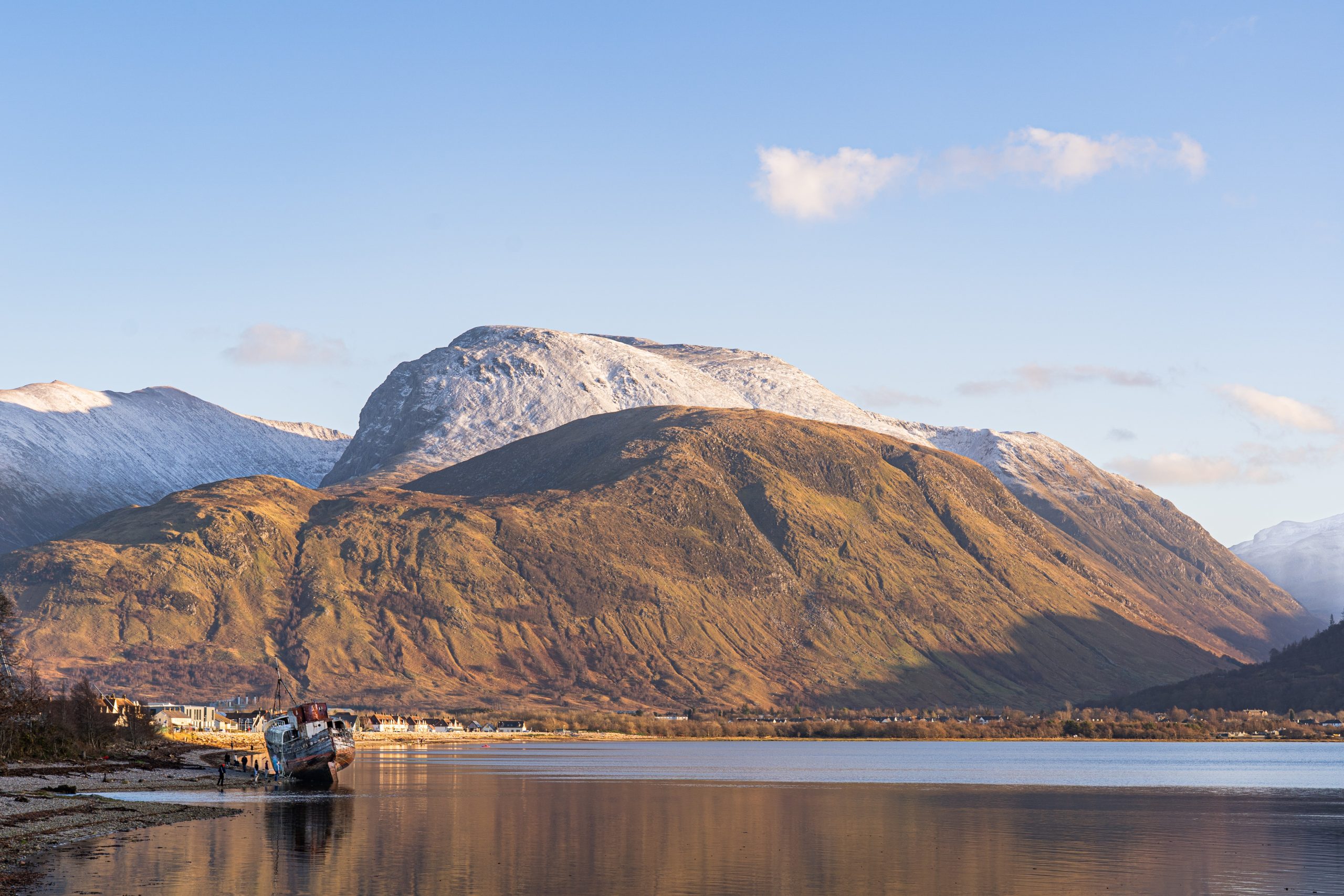
The reference does not need to be large. A small boat below Ben Nevis can make the mountain feel more imposing than a photograph where the summit occupies every inch of the frame.
Use foreground without blocking the view
Foreground gives the photograph a place to begin. Moorland grass, a wall, a shoreline or the curve of a path can lead the eye toward the mountain and create depth.
Too much foreground has the opposite effect. If the lower half of the picture is filled with detail that does not help the subject, the mountain starts to feel incidental. Choose one useful shape and remove the rest by adjusting your position.
Keep an eye on the corners. A bright stone, clipped fence post or branch entering from the edge can become more noticeable in a print than it seemed on the camera screen.
Let distance create layers
Mountain scenes often work because they contain several distances at once: a near foreground, a darker middle ridge and a paler mountain beyond it. Mist and rain can strengthen those layers by reducing contrast as the landscape recedes.
A longer lens compresses the distances and makes ridges appear closer together. A wider lens gives more space to the foreground and sky. Neither is automatically better. Choose the lens according to the relationship you want to show.
Wide view
Use it when the foreground and weather are part of the story. Keep the mountain clearly dominant rather than letting empty land take over.
Longer view
Use it to stack ridges, isolate a patch of light or show a small human element against the mountain.
Do not wait only for clear weather
Blue sky can describe the shape of a mountain clearly, but cloud often gives it weight. A summit appearing briefly through low cloud may say more about the place than a completely open view.
Watch where the light is moving rather than waiting for the whole scene to become bright. A short break in the cloud can separate one ridge, boat or building while the rest remains quiet.
Rain, mist and cloud also simplify colour. Greens become darker, distant slopes lose saturation and the picture can settle into a small range of greys, blues and earth tones. Our guide to photographing landscapes in bad weather looks more closely at why those conditions often produce stronger prints.
Protect the highlights and keep the shadows believable
Mountain weather creates sharp differences between a bright gap in the cloud and a dark slope. Check the brightest part of the sky before taking the picture. If it has lost all detail, lower the exposure slightly.
Do not brighten every shadow later. Dark ground and heavy weather are part of how the scene felt. Lifting them too far can make the photograph look flatter and remove the separation between the layers.
A restrained edit usually ages better: a believable white balance, enough contrast to distinguish the ridges, and colour that still resembles the conditions you saw.
Work safely and accept the photograph you can make
A camera is not a reason to continue into poor visibility, unstable ground or worsening wind. Check a dedicated mountain forecast before leaving and keep decisions separate from the hope of getting one more frame. The Mountain Weather Information Service publishes forecasts for UK mountain areas.
Many strong mountain photographs are made from roadsides, shores and low ground. Distance can help the landscape read more clearly. You do not need to stand on a summit to make a photograph that expresses its size.
Choose the frame that still works when the drama fades
A mountain photograph may feel impressive because the day was difficult. The picture still needs structure after that memory has faded.
Look for a clear route through the frame, useful separation between distances and one visual anchor. Then leave the image alone for a few days before choosing it. The strongest frame is often quieter than the one that first looked dramatic on the back of the camera.
The Scottish Highlands landscape photography guide applies these ideas to Glencoe, Rannoch Moor, Skye and other Highland settings. For the finished image, What Makes a Landscape Print Timeless? explains why restraint matters once a photograph moves onto a wall.
Two Ben Nevis photographs built around scale
Both photographs use the Old Boat of Caol as a familiar anchor. Ben Nevis stays distant, while the boat, shoreline and winter light give the mountain a sense of size and place.
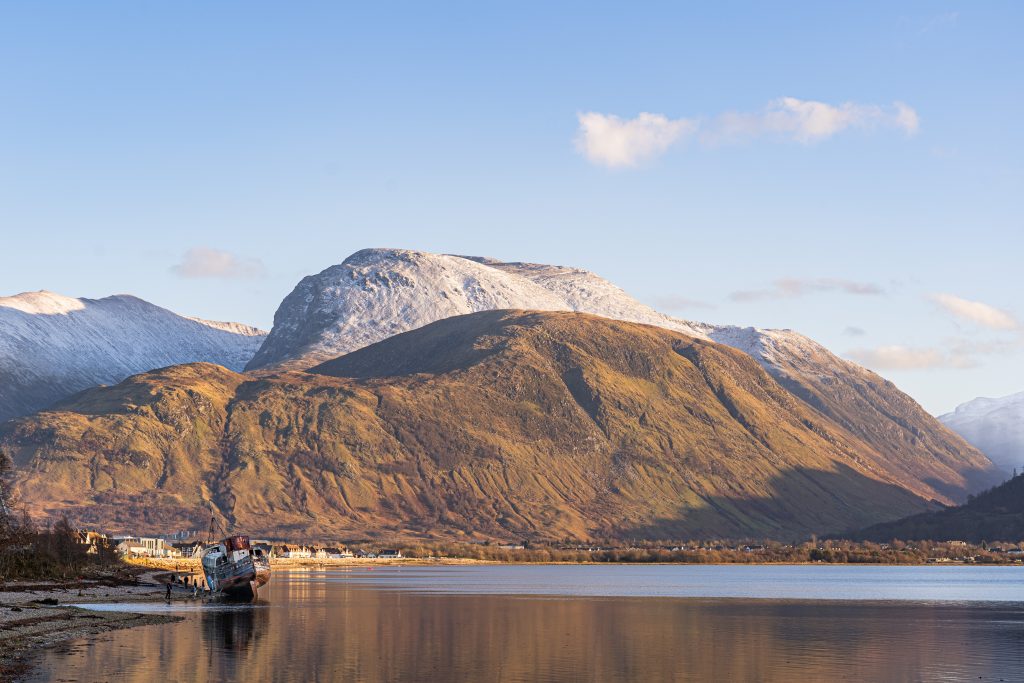
Ben Nevis and the Old Boat of Caol
The small boat and open water provide the scale; Ben Nevis holds the horizon without filling the frame.
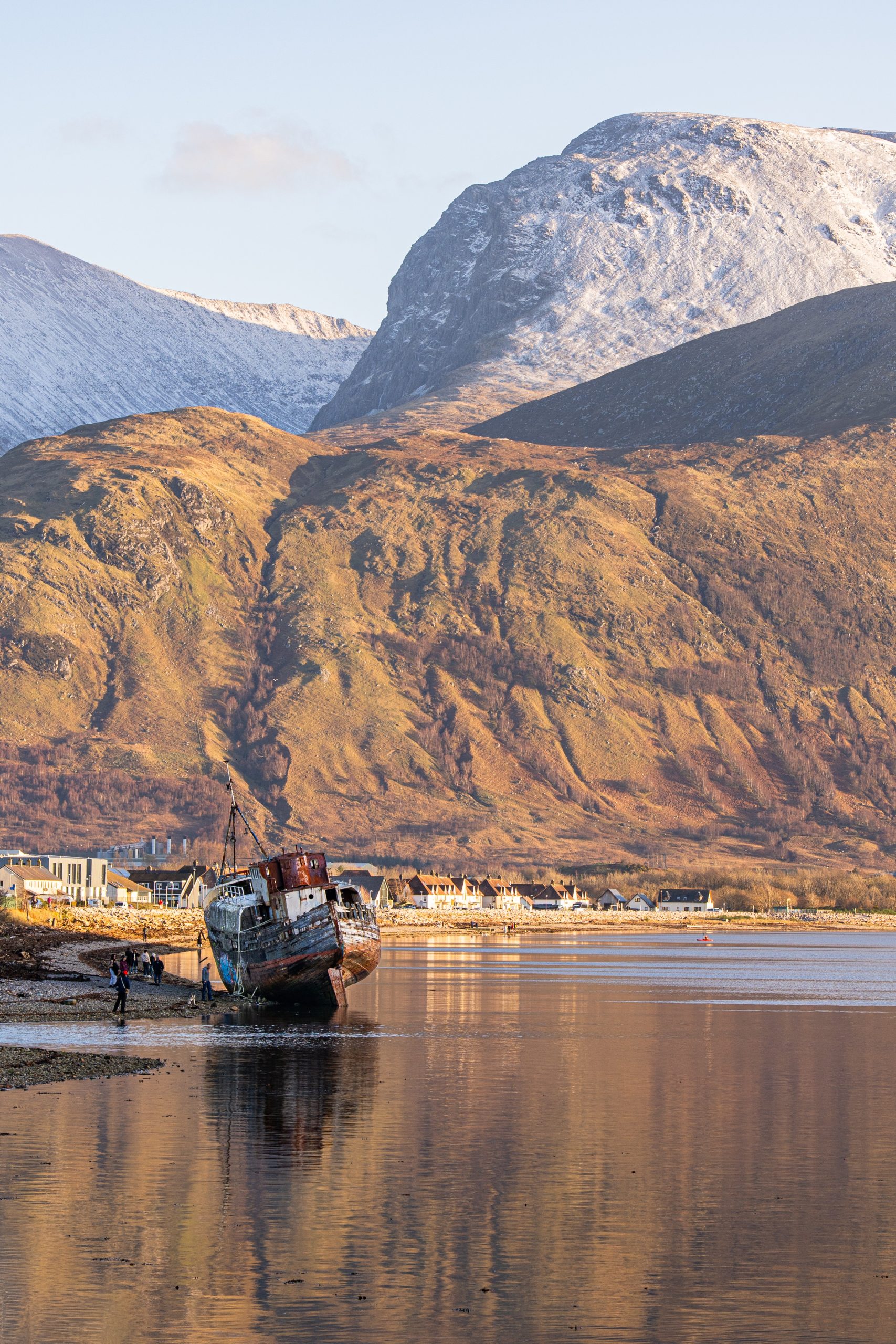
Old Boat Below Ben Nevis
A quieter balance of boat, shoreline and mountain, with soft winter light separating the distances.
Look for scale before spectacle
The mountain does not need to fill the frame. Give it distance, weather and one familiar point of reference, and its size will carry through to the photograph.