
Everyone waits for good weather. That is usually the mistake.
Everyone waits for good weather.
That is usually the mistake.
Clear skies are comfortable. They make walking easier. They make the drive feel less questionable. They make the camera bag less annoying to carry.
They rarely make the best landscape photographs.
The postcard version of a place is easy to understand: blue sky, clean view, warm light, everything visible. It is also the version everyone has seen before.
Bad weather gives a photograph something else.
Mood.
Clear days show the place. Bad weather shows the feeling.
A clear day describes a landscape. You can see the hill, the coastline, the tree, the castle, the ridge.
Bad weather changes the question.
It asks what the place feels like.
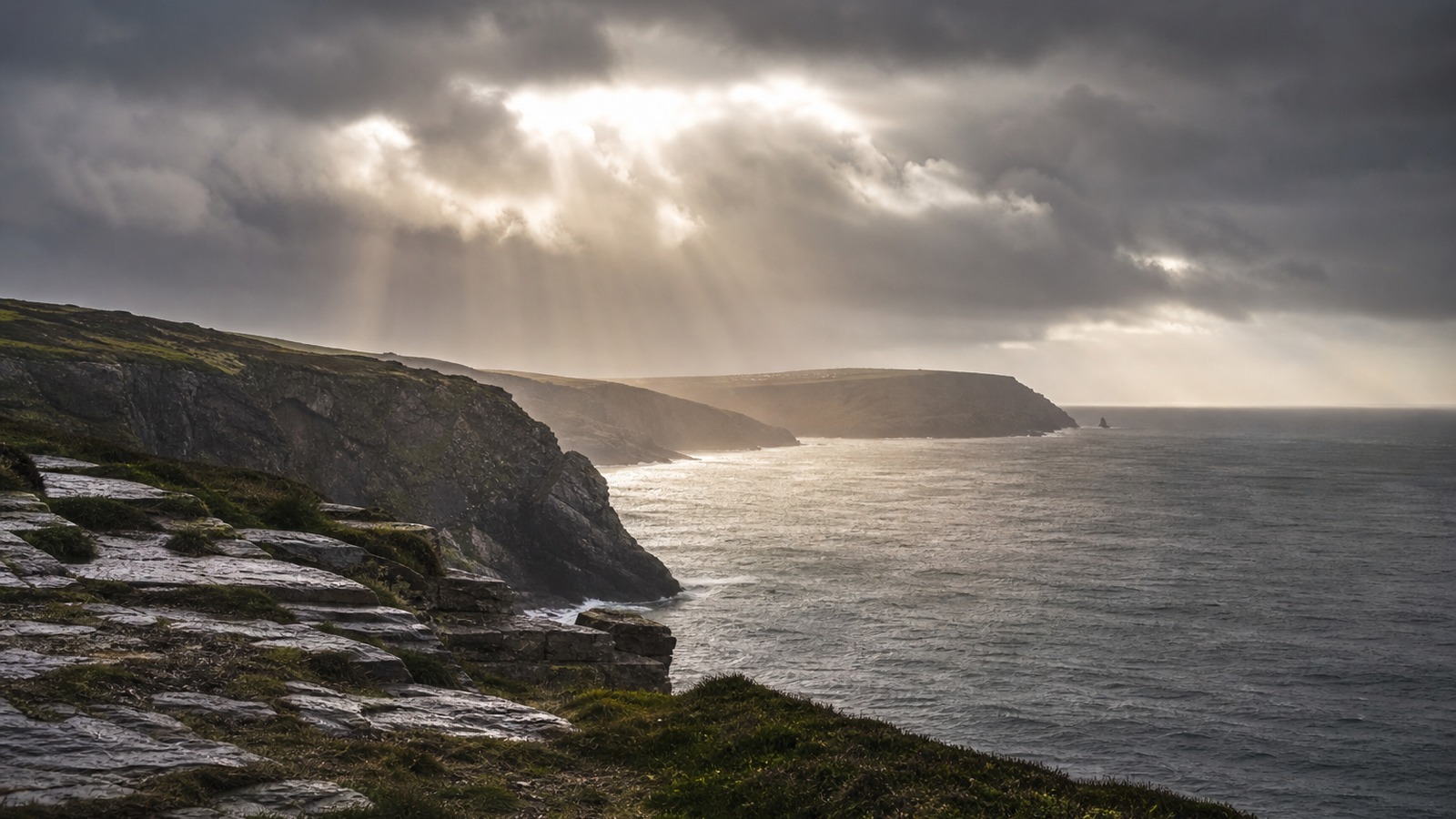
Low cloud hides part of the frame. Rain softens distance. Mist removes clutter. A break in heavy cloud can throw light across one patch of land and leave everything else dark.
That is where drama comes from.
Not from forcing contrast in editing. Not from dragging sliders until the file falls apart.
From conditions that already had tension in them.
Britain is built for this kind of photography
British landscape photography is not about endless perfect light.
Most of the time, Britain gives you grey skies, wet paths, wind, cloud and half a chance of something interesting happening if you wait long enough.
That sounds like a problem.
It is the advantage.
The Scottish Highlands, Northumberland coast, Peak District and Lake District all photograph better when the weather has weight. The landscapes are old, rough and uneven. They suit atmosphere. They do not need tropical colour.
A blue sky can make them look smaller.
Cloud gives them scale.
Bad weather simplifies the frame
One of the hardest parts of landscape photography is deciding what to leave out.
Good weather often gives you too much. Too much detail. Too much colour. Too many distractions in the distance.
Mist solves that.
Rain solves that.
Low cloud solves that.
A messy hillside becomes three layers. A busy woodland becomes a line of trees fading into grey. A valley becomes shape and tone instead of clutter.
For prints, this matters.
Images that work on a wall need clarity. They need to hold together from across a room. Bad weather often removes the unnecessary parts before the photographer even touches the camera.
The light changes faster
Bad weather is rarely static.
Cloud moves. Rain passes. Mist lifts. Sun breaks through for seconds, then disappears again.
That can be frustrating if you want control.
It is useful if you want a photograph that does not look like everyone else's.
Some of my strongest images came from days I nearly abandoned. Forecast said rain. Car park was empty. The first hour looked hopeless.
Then the cloud opened once.
Twenty seconds.
That was the photograph.
The point is not that every bad-weather trip works. Most do not. The point is that when they do work, the image often has more character than anything made under perfect conditions.
Empty places photograph better
Bad weather also removes people.
That sounds blunt, but it matters.
Popular viewpoints change completely when the car park is empty. The camera slows down. You stop trying to work around everyone else. You notice smaller frames. You hear the place instead of the crowd.
Landscape photography needs attention.
Bad weather gives you fewer distractions.
There is a reason many dramatic landscape prints come from days most people would have stayed home. The photographer had the place to themselves.
What to look for in bad weather
Bad weather does not automatically make a good photograph. Grey flat light is still grey flat light.
The trick is to look for structure.
Useful conditions include:
- Low cloud sitting below a ridge
- Mist separating layers of hills
- Storm light breaking through dark sky
- Rain in the distance, especially over open land
- Wet rock, which catches light better than dry rock
- Empty beaches with heavy cloud
- Woodland fog, where depth becomes visible
The best bad-weather images usually have one clear subject and one strong atmosphere.
Not ten things happening at once.
Why bad weather prints well
A photograph that looks good on a phone does not always work as a print.
Prints are slower. You live with them. They need to keep giving something back after the first glance.
Bad-weather images often do that well because they are less obvious.
They do not shout. They sit in a room and change with the light around them. A dark cloud print looks different in morning light than it does at night. A misty woodland print can make a hallway feel deeper. A stormy coastal print can anchor a room without adding colour noise.
That is why moody landscape photography works so well as wall art.
It brings atmosphere without demanding attention every second.
The edit should respect the weather
The fastest way to ruin a bad-weather image is to edit it like a sunny one.
Not every file needs warmth. Not every sky needs saturation. Not every shadow needs lifting.
If the day was cold, let it be cold.
If the light was flat, look for tone and shape instead of fake drama.
If the landscape was quiet, do not force it to become cinematic.
The strongest British landscape photographs often work because they are honest about the weather. Grey can be beautiful. Rain can be useful. Mist can be the subject.
Bad weather rewards stubbornness
Landscape photography is not mostly about gear.
Gear helps. Good lenses help. A solid tripod helps when the wind is trying to fold you in half.
But the real difference is usually simpler.
Who showed up?
Who stayed when the first hour looked pointless?
Who waited five more minutes?
That is where the image comes from.
Bad weather does not guarantee better photographs. It just gives better chances to people willing to look uncomfortable for a while.
Moody landscape prints from The Other Variant
If you like storm light, heavy skies and atmosphere, start with the Nature collection — especially seascape prints that carry weather and space without shouting.
Print mentioned in this article
A quick visual reference for the Othervariant print linked above.
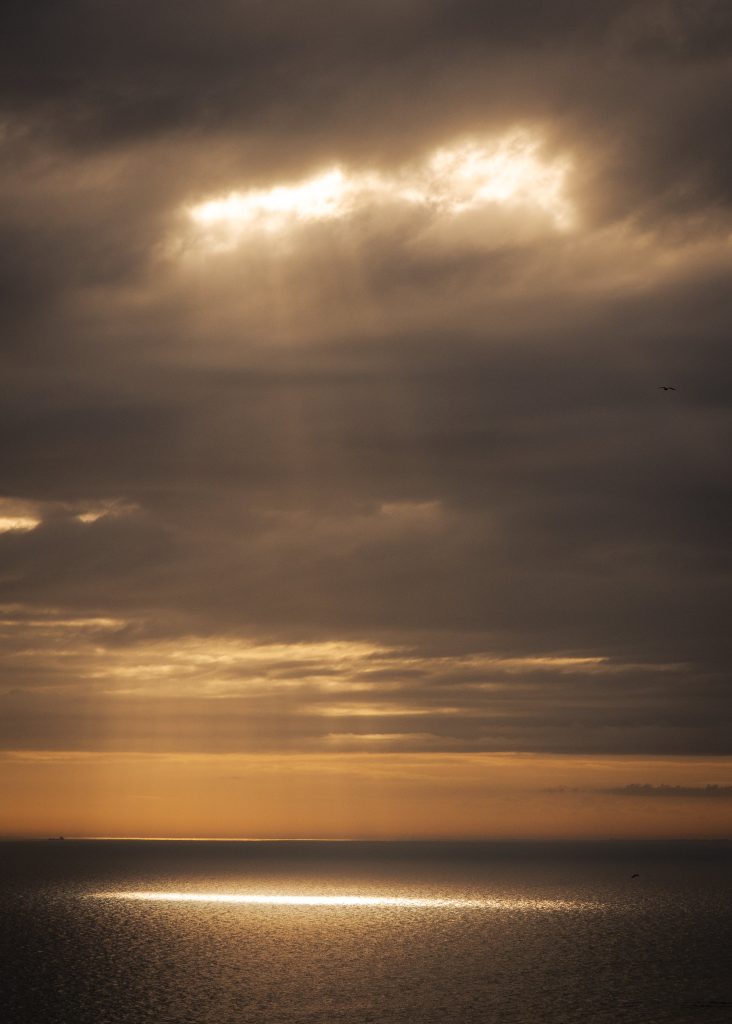
Light Break
Othervariant nature available in multiple sizes and configurations.