
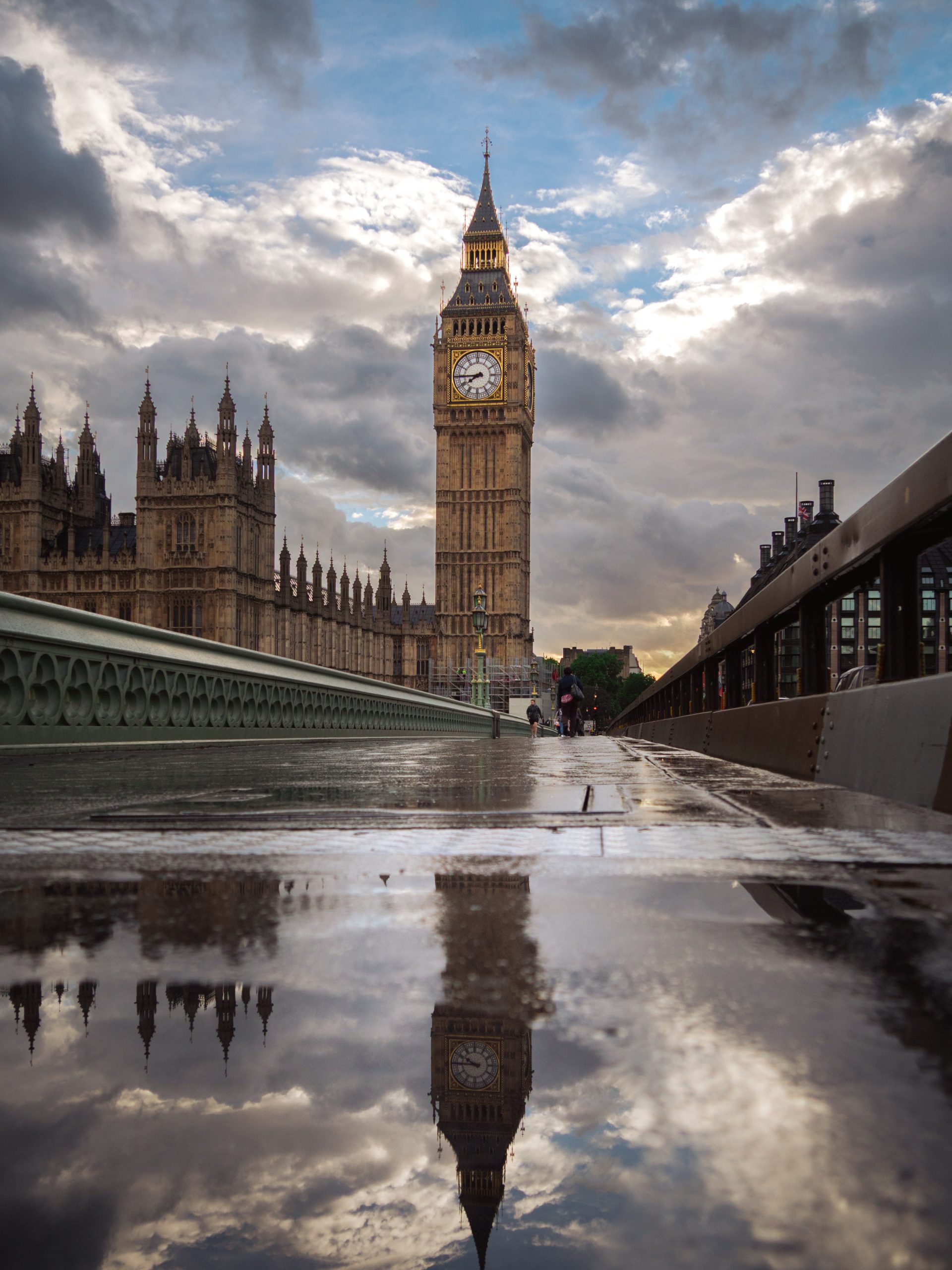
A picture ledge gives photography prints room to move. You can layer frames, change the arrangement and live with a print before deciding whether it needs a permanent place on the wall.
The difficulty is restraint. A ledge can start as a simple line of photographs and quickly become a shelf of unrelated frames, books and objects. The prints lose their presence because everything asks for attention at once.
How to style a picture ledge with photography prints
Start with the ledge itself. Look at its length, the furniture below it and the distance from which you usually see it. A ledge above a sideboard can take a wider arrangement. A short ledge beside a desk may need only two frames.
Do not begin by collecting every small print you own. Begin with one photograph that can hold the arrangement together. It might be the largest frame, the darkest image or the picture with the clearest subject. Place it slightly away from the exact centre. This makes the arrangement feel less formal while still giving the eye somewhere to land.
A vertical photograph works well as an anchor because it creates height without taking over the full ledge. A horizontal print can then sit partly in front or beside it, giving the group a lower, calmer line.
Keep one thing consistent
The photographs do not need to match. The frames do not all need to be identical either. But one repeated quality helps the ledge feel deliberate.
Repeat the frame finish
Use black, pale wood or another restrained finish across most of the group. The images can then carry more contrast without the frames competing.
Repeat the mood
Mix London architecture with a seascape if both feel quiet. Similar light or tonal weight can connect subjects that would otherwise seem unrelated.
Repeat the spacing
Allow a clear gap at each end and avoid squeezing every frame together. Empty space is part of the arrangement.
Changing every variable at once usually creates clutter. Three frame colours, several mount widths, unrelated subjects and small decorative objects may all be interesting alone. Together, they can make the photography feel secondary.
Overlap frames without hiding the photographs
Layering is what separates a picture ledge from a row of wall hooks. A small overlap can give the arrangement depth and make it easier to adjust. The overlap should cover the frame edge or a quiet part of the image, not the main subject.
Stand at the normal viewing position before deciding. A detail that looks clear while you are arranging the ledge may disappear from across the room. If one frame blocks a face, landmark, bright horizon or important line, move it. The photographs still need to read as photographs, not just coloured rectangles.
Keep the deepest layer simple. One tall frame behind and one lower frame in front is often enough. If every print sits in a different layer, the ledge starts to feel like storage.
Use different orientations to create rhythm
A row of frames at the same height can look stiff. A completely random skyline can look restless. Mixing one vertical print with one or two horizontal pieces gives the eye a simple rise and fall.
This is also a useful way to combine photography from different places. A vertical London landmark can bring structure. A wide seascape can add distance and quiet. They do not need the same subject when their roles are clear.
If you are working with smaller frames, the guide to using small photography prints in quiet corners explains why a clear focal point matters more as the image gets smaller.
Two print directions that work on a ledge
These two photographs show the basic contrast: one upright city image to give the group height, and one wide horizon to soften it. They can work separately. The point is the balance between structure and space, not buying a matching set.
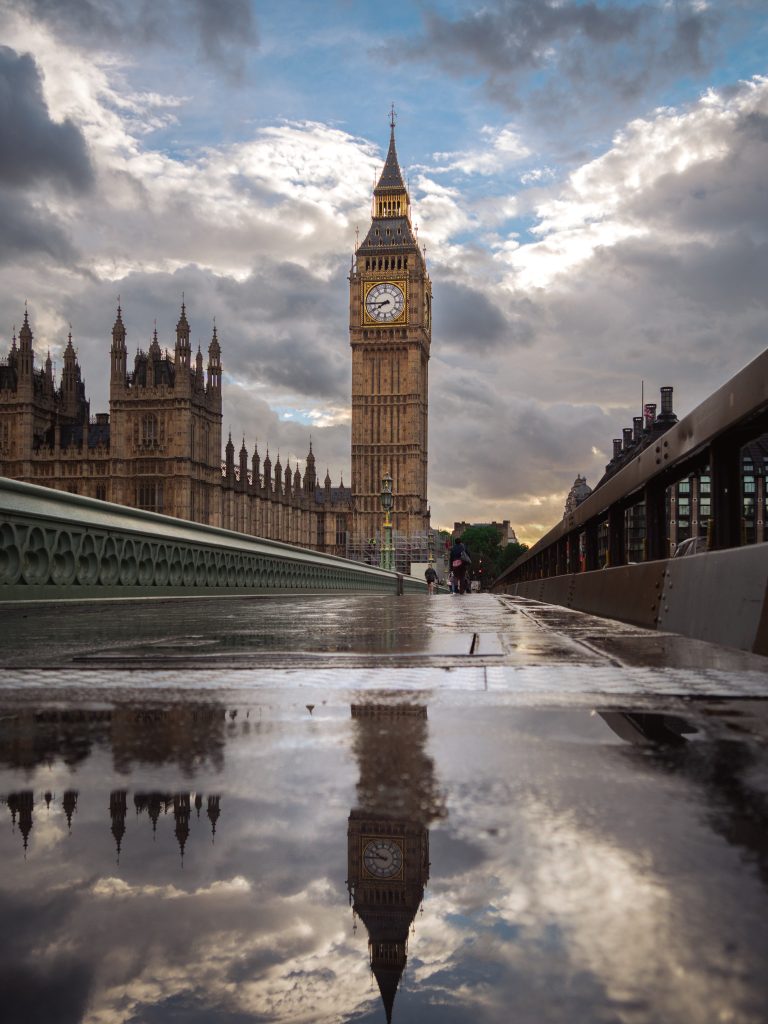
Big Ben After Rain
An upright Westminster photograph with a clear landmark and wet pavement reflections. Useful when the arrangement needs height and a strong centre.
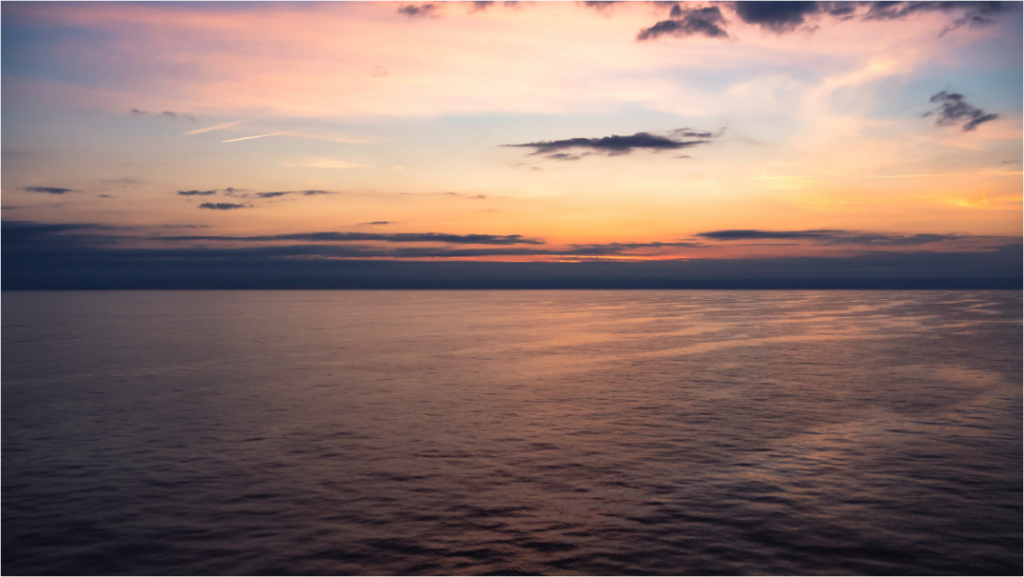
Crossing at Dawn
A low horizon and open negative space give a layered group somewhere to breathe. The wide shape balances a taller city frame.
Keep objects secondary
A small lamp, ceramic piece or short stack of books can help a ledge belong to the room. It should not become the subject. If you add an object, remove a frame or create more space around the group.
A simple test is to take a quick phone photograph of the whole wall. The smaller view makes clutter obvious. If your eye goes to five objects before it reaches the photography, edit the ledge again.
Make sure every frame sits securely behind the ledge lip, and follow the ledge maker’s fixing and load guidance. Styling only works when the frames are properly supported.
When a picture ledge is the better choice
A ledge suits people who like to change photographs, rent their home or want to test an arrangement before hanging each frame. The guide to wall art for rental homes has more ideas for leaning and moving framed prints without making the room feel temporary.
It is less useful when the wall already has a strong architectural line or when one large photograph would do the job more quietly. If you want several prints to read as one fixed composition, a measured photography gallery wall may be the better route.
The final arrangement does not need to look perfectly styled. It needs a clear anchor, enough air and photographs you still notice after the objects around them become familiar.
Choose the anchor print first
Start with one photograph you would keep even if the rest of the ledge disappeared. Build the quieter pieces around that.