
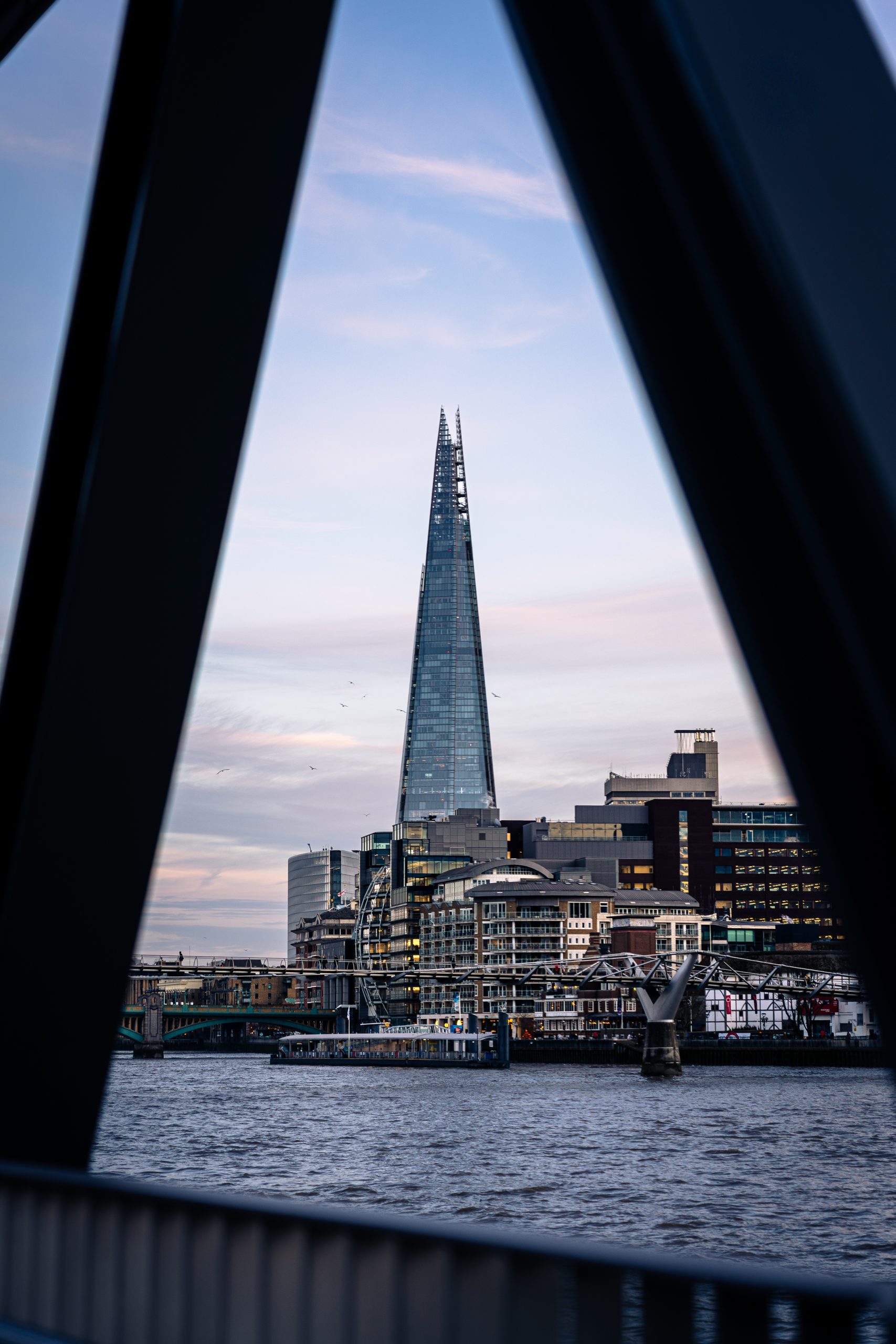
A television already gives the wall a strong dark rectangle. The best wall art around it does not try to disguise that fact. It adds balance, warmth and a reason for the room to feel considered when the screen is off.
TV walls are awkward because the main object was designed for viewing, not for decorating. A large black screen pulls attention even when it is off. Adding several small frames around it can make the whole wall feel heavier rather than softer.
The calmer approach is to treat the television as part of the layout. It does not need to become invisible. It needs visual company that feels deliberate.
Start with the TV unit, not the full wall
Use the media unit or sideboard as the visual base. The television, furniture and photography should read as one contained group. If the art spreads far beyond the furniture, the arrangement can lose its shape.
Look at the combined width of the screen and unit. That is usually a better boundary than the full width of the room. A single portrait print beside the TV, or one on each side, can fill the gap without turning the wall into a gallery display.
If the television sits off-centre, do not force perfect symmetry. Place a stronger vertical print on the more open side and leave the tighter side quiet. Balance matters more than matching.
One print beside the screen
Best for a narrow wall or an off-centre TV. Choose a portrait photograph with a clear subject and enough empty space around it.
A balanced pair
Useful when the screen sits centrally. Repeat the frame size and hanging height so the television remains the middle of the arrangement.
A restrained gallery layout
Works on a wide wall, but keep the frame finish and spacing consistent. Four calm prints usually work better than nine unrelated ones.
What kind of photography works around a TV?
Simple structure tends to work better than fine detail. Architecture, open skies, quiet landscapes and clear silhouettes can hold their own near a screen without competing with whatever is playing.
Colour matters too. A wall of very bright photographs can make the black screen look harsher. Muted colour, dusk light and black-and-white photography usually sit more quietly. They still give the wall character, but they do not create another visual broadcast.
This does not mean every image has to be neutral. One warm reflection, evening sky or small area of colour can stop the room feeling cold. The useful test is simple: when you step back, does the art soften the screen or make the wall louder?
Should the prints go above or beside the television?
Beside the TV is usually easier. The screen already occupies the main horizontal zone, so portrait prints can use the empty space at either side. This also keeps the artwork closer to eye level.
A print above the television can work if there is generous space and the ceiling is not too low. Keep a clear gap between the top of the screen and the frame. A long panoramic image may look neat on paper, but two stacked horizontal rectangles can become visually heavy. A smaller print with breathing room is often calmer.
For more help with the shape of the image, the guide to vertical and horizontal photography wall art explains how orientation changes the way a wall feels.
| TV-wall situation | Photography approach | What to avoid |
|---|---|---|
| Narrow wall | One portrait print on the open side | Small frames squeezed into every gap |
| Wide media unit | A matching portrait print on each side | Art extending far beyond the furniture |
| Dark painted wall | Light-toned landscape or architectural print | Several dense black frames merging with the screen |
| Open shelving nearby | One simple print with a quiet palette | Adding a full gallery wall beside busy shelves |
Keep the spacing consistent
Uneven gaps make a TV wall feel accidental. Choose one distance between the screen and the nearest frame, then repeat it where the layout allows. The exact measurement matters less than the rhythm.
Leave more space than your first instinct suggests. Screens have a strong visual edge. If a frame sits too close, it can look attached to the television. A little bare wall keeps each object separate.
Before drilling, cut paper templates to the frame sizes and tape them to the wall. View them from the sofa, the doorway and the side of the room. The arrangement should feel settled from the places where you actually see it, not only from directly in front.
Match the frames to the room, not the television
It is tempting to choose black frames because the TV is black. That can work in a crisp, modern room, but it is not the only answer. Oak or pale wood can bring warmth and stop the wall becoming a collection of dark rectangles.
Repeat the same frame finish across the arrangement. If you mix black, white and timber around a screen, the eye has too many edges to process. The photography can vary slightly when the presentation stays calm.
The broader guide to choosing living room wall art can help if the TV wall needs to connect with prints elsewhere in the room.
Two print directions for a TV wall
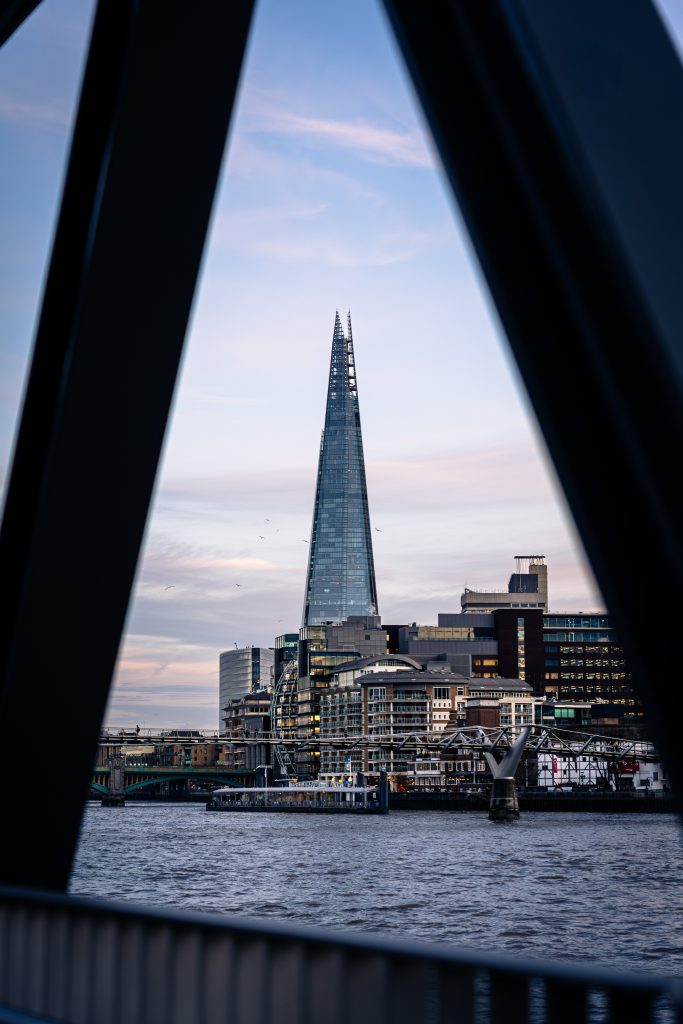
Shard Between Shadows
A portrait London architecture print with a clear central shape. Its restrained palette works well beside a screen where the wall needs structure rather than more colour.
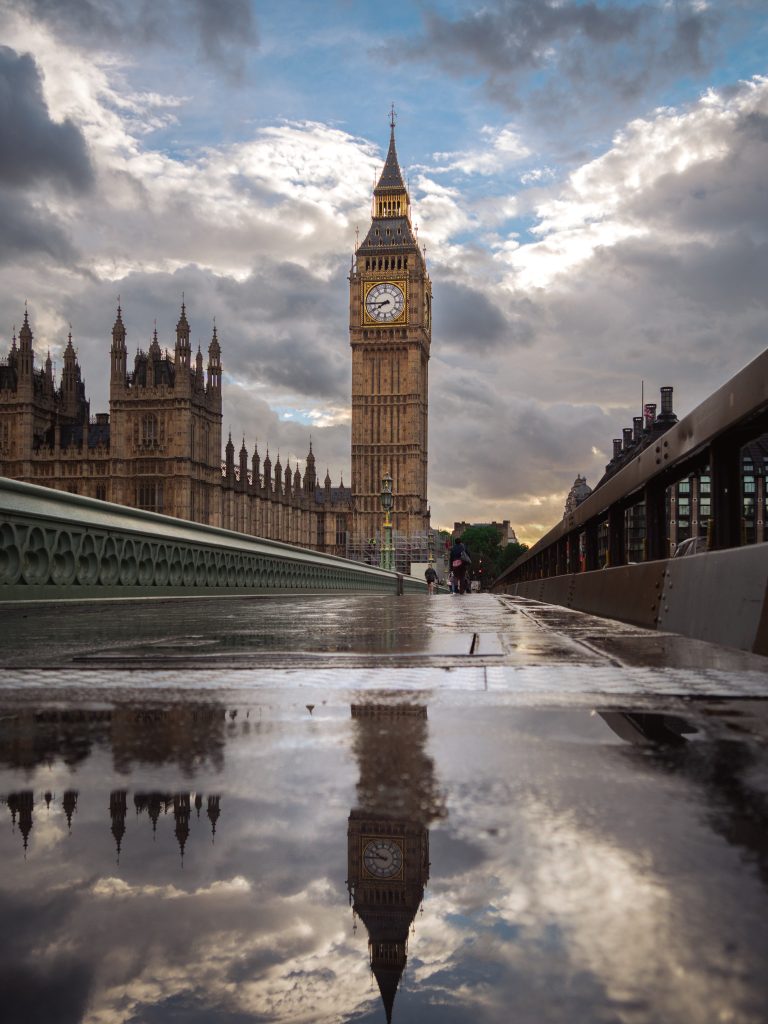
Big Ben After Rain
A vertical Westminster photograph with soft reflections and evening colour. It can warm a dark TV wall without making the arrangement feel decorative.
Let the screen stay a screen
A TV wall does not need a trick. It needs proportion. Choose one clear layout, use fewer frames, and leave some wall visible between them.
When the television is on, the art should sit quietly beside it. When the television is off, the wall should still feel like part of the room. That is enough.
Explore London photography prints with strong shapes, quiet colour and enough presence to sit beside a television without adding clutter.