
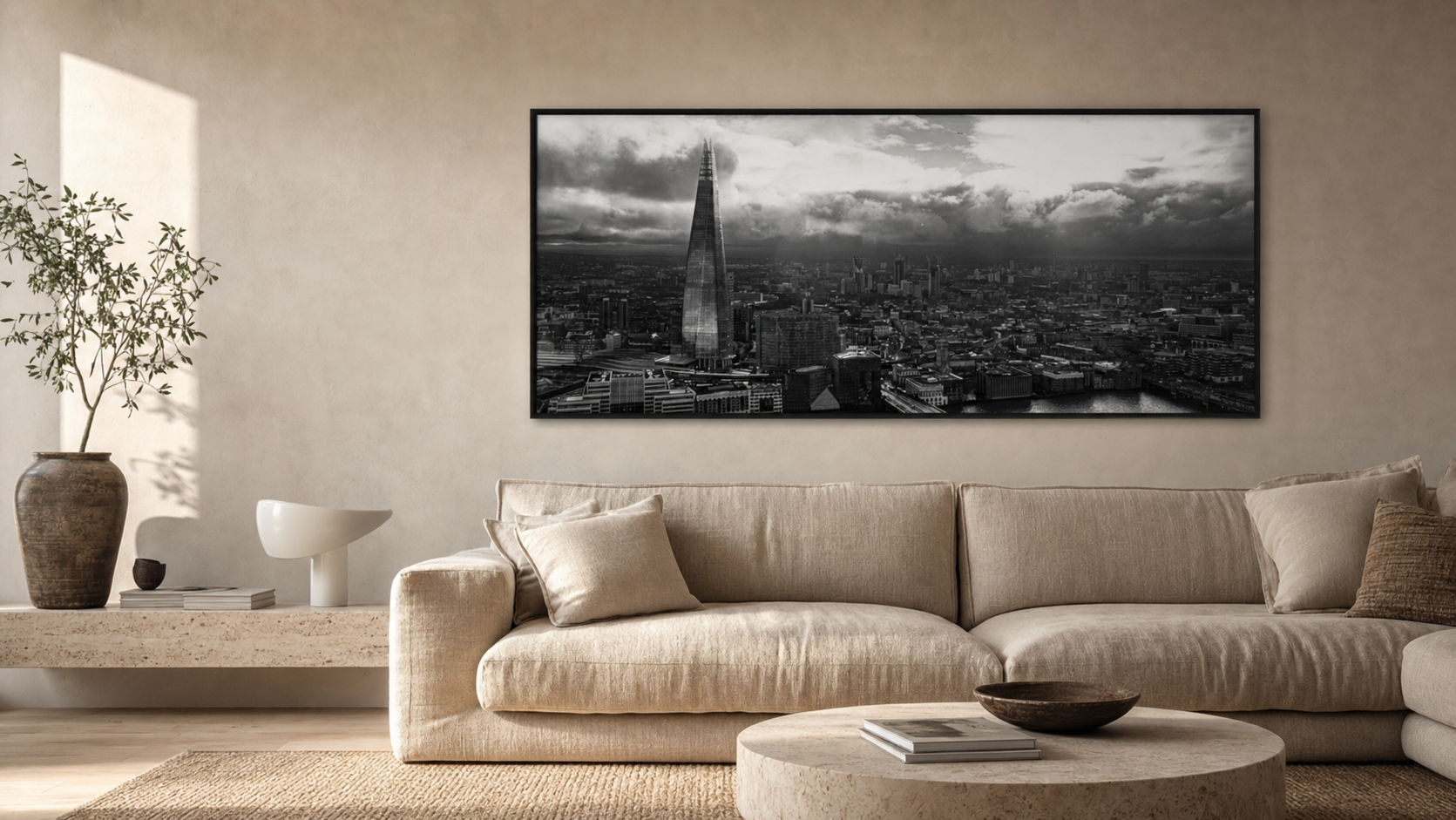
Panoramic wall art works when a room needs one calm, horizontal line instead of several small pieces competing for attention.
Some walls do not need a gallery wall. They need one long photograph with enough space to breathe.
That is where panoramic wall art works best. A wide print can stretch with the room, follow the line of a sofa, bench or sideboard, and make the wall feel intentional without filling it with too many separate decisions.
It is not only about size. It is about direction. A panoramic photography print leads the eye sideways. It can make a room feel wider, calmer and more settled, especially when the image has distance, skyline, water, architecture or open sky.
When panoramic wall art makes sense
A wide print is usually strongest when the wall already has a horizontal anchor below it. That might be a sofa, dining bench, console, bed headboard, low cabinet or long hallway shelf.
The print should not feel like it has been squeezed into the space. It should feel like the wall was waiting for that shape.
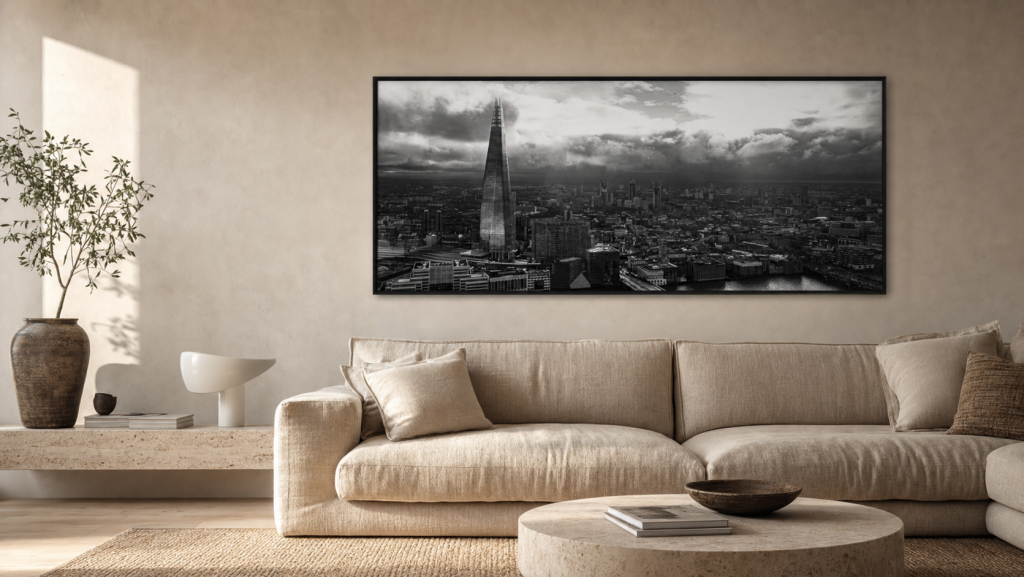
Above a sofa
A panoramic print can replace a row of smaller frames. It gives the wall one clean visual line and keeps the seating area calm.
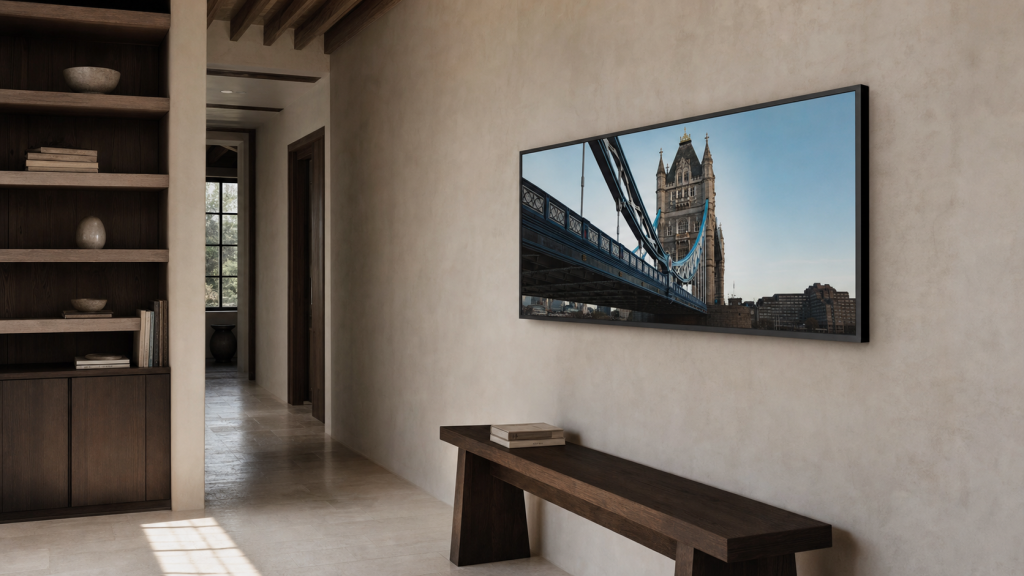
Along a hallway
Long walls often feel awkward with square art. A horizontal photograph can guide the eye through the space without making it busy.
Above a sideboard
Low furniture often leaves too much blank wall above it. A wide print fills that space without needing a crowded arrangement.
What kind of photography works as a panoramic print?
The safest subjects are images with natural horizontal movement. Skylines, coastlines, bridges, distant landscapes and quiet architectural views all tend to work well.
A panoramic crop can feel forced if the subject wants to be vertical. Tall buildings, portraits and narrow staircases often need a different shape. But when the image already has a wide rhythm, the print can feel unusually settled.
For The Other Variant, London architecture works especially well in this format because the city has strong horizontal structure: river lines, rooflines, bridges, skyline layers and long blocks of light and shadow.
How big should a panoramic print be?
Use the furniture below it as the first guide. A wide print above a sofa or sideboard usually looks best when it is roughly two thirds to three quarters of the furniture width. It does not need to fill the whole wall.
If the print is too small, it can look lost. If it is too large, the room can feel like a showroom. The useful middle ground is simple: leave breathing room on both sides and let the print sit comfortably inside the wall, not edge to edge.
| Wall situation | Best panoramic approach |
|---|---|
| Long sofa wall | One wide print centred above the sofa, with space at both ends. |
| Narrow hallway | A calm horizontal print placed where it can be seen while walking through. |
| Dining bench or sideboard | A print that follows the furniture line without touching shelves, lamps or door frames. |
| Small room | A lighter image with sky, water or distance so the print does not feel heavy. |
Why a panoramic print can be better than a gallery wall
Gallery walls can work, but they ask more from the room. Multiple frames create multiple edges, colours, gaps and alignment decisions.
A panoramic print is simpler. One image. One frame. One line across the wall.
That simplicity is useful if the room already has texture: books, plants, linen, wood, stone, windows, lamps or patterned flooring. The photograph can give the wall presence without adding more visual noise.
The best panoramic wall art does not shout for attention. It gives the room a longer, calmer horizon.
Two print directions that suit the format
If you want the wall to feel quiet rather than decorated, start with images that already have structure and distance.
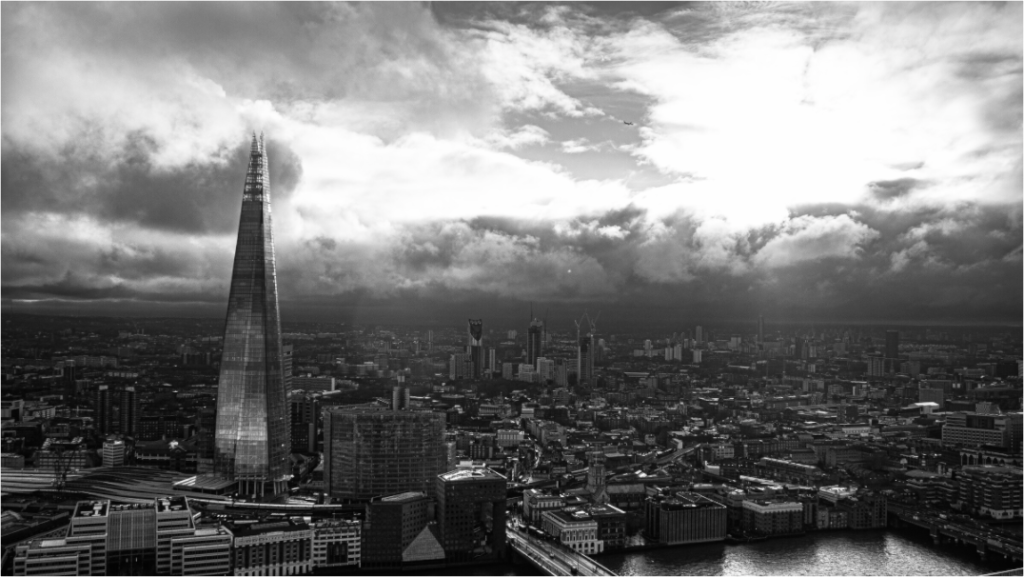
The Shard from Sky Garden
A black and white London skyline print with strong width, distance and a quiet architectural horizon.
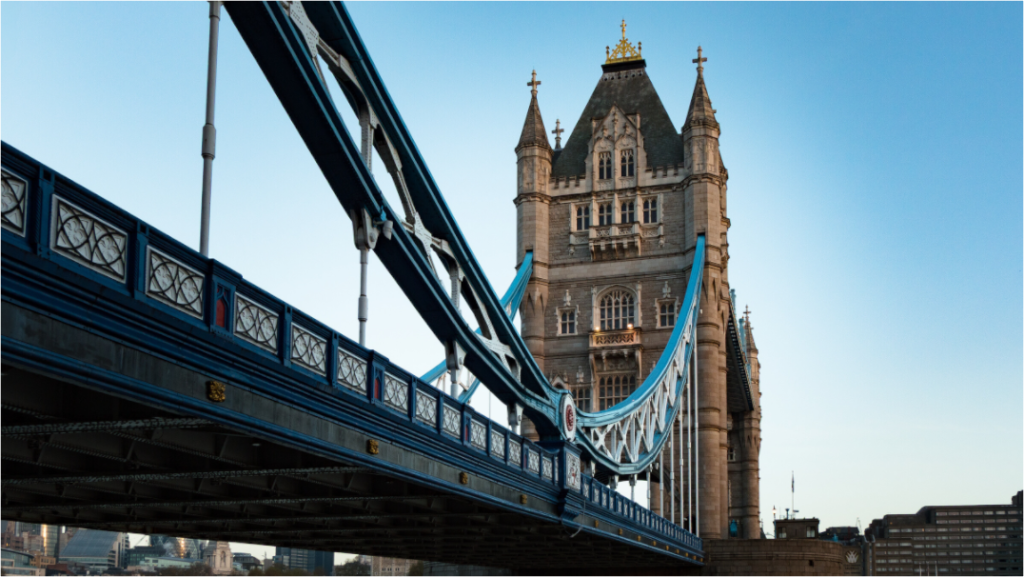
Tower Bridge Steel
A structured London architecture print with a clear horizontal pull and enough detail for a longer wall.
Keep the frame quiet
Panoramic prints already have presence because of their shape. The frame does not need to do much. A thin black, dark wood or simple natural frame is usually enough.
If the image is already busy, avoid a heavy mount or overly decorative frame. If the image is very minimal, a small mount can help it breathe. The point is not to make the print louder. The point is to let the photograph hold the wall cleanly.
Looking for a wide print with structure, distance and quiet visual weight?