
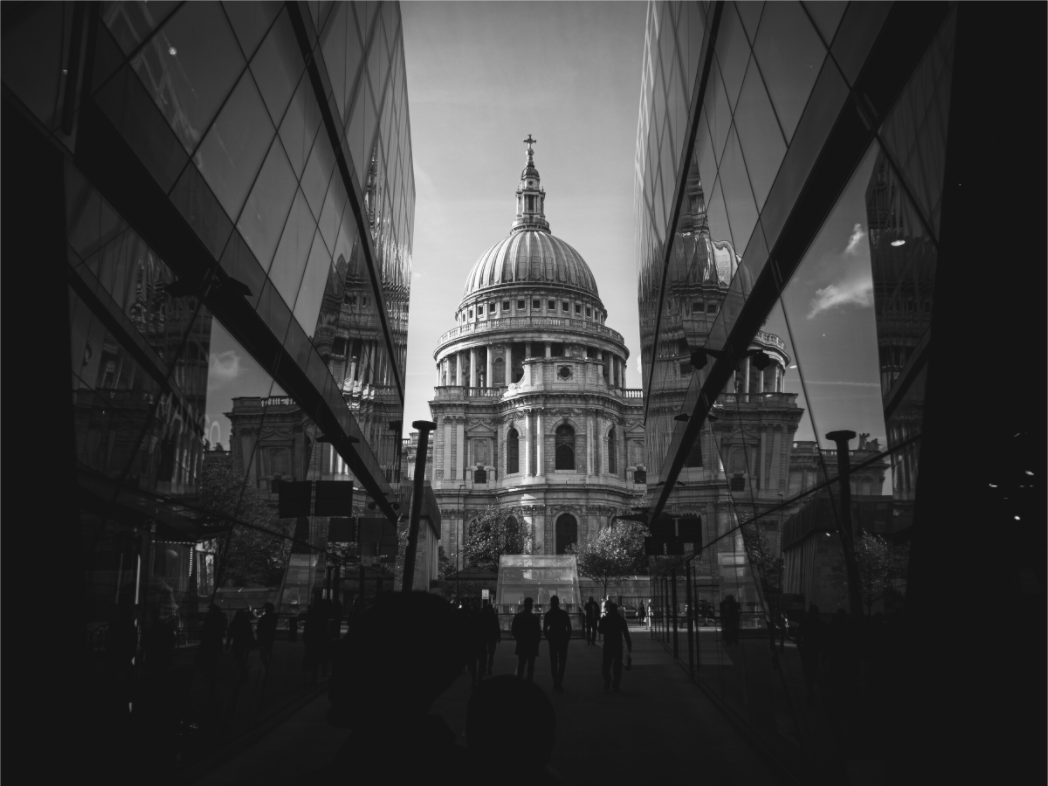
A good black and white photograph is not just a colour photograph with the colour removed. It has to hold together without the easy help of colour. Light, shadow, shape, texture and timing carry the whole image.
That is why black and white photography still matters. Every phone can capture clean colour now. Monochrome does something different. It removes the obvious layer and leaves the frame exposed.
For wall art, that matters even more. A black and white print can feel calm without becoming empty. It can sit in a minimal room without shouting for attention. It can make architecture feel heavier, older and more permanent than the same scene in colour.
It starts with light, not editing
The easiest mistake is thinking black and white is mainly an editing choice. It is not. The best monochrome images usually begin with light that already has structure.
Hard side light can carve detail into stone. Soft mist can flatten a landscape into layers. Low evening light can turn a building into a silhouette. None of that depends on colour. It depends on the direction and quality of the light.
This is why architectural subjects often work well in monochrome. The lines are already there. The print does not need blue skies or sunset colour to explain itself. A subject like St. Paul’s Cathedral in black and white can lean on symmetry, stone, shadow and scale instead.
Contrast gives the image its bones
Contrast is not just making the blacks blacker. It is the separation between the important parts of the frame.
A good black and white photograph usually has a clear hierarchy. The eye knows where to go first. Then it finds the secondary details. Then it rests.
If every tone sits in the same middle grey, the image can feel muddy. If every part is pushed too hard, it can feel loud and brittle.
The useful question is simple: can you understand the photograph from across the room?
That test matters for prints. Wall art is not viewed like an image on a phone. You see it while walking past, sitting down, making coffee, talking to someone. A strong monochrome print should still hold its shape from a distance.
Texture replaces colour
When colour disappears, texture has to do more of the work.
Stone, clouds, water, glass, metal, grain, tree bark, old brick and wet pavement give the photograph something physical. They make the print feel less like a flat graphic and more like a scene you can almost touch.
This is one reason black and white works so well for London architecture. The city has material. Steel. Stone. Glass. River light. The colour palette can be messy, but the textures often make sense.
In a print like The Shard from Sky Garden, the skyline becomes less about colour and more about geometry, haze and vertical weight.
The subject must survive without colour
Some photographs need colour. A red coat in a grey street. Autumn leaves. Blue water under bright sun. Remove colour from those scenes and the point may disappear.
A good black and white subject has a reason to exist without colour. It might be a clean outline, a human gesture, repeating shapes, dramatic weather, strong architecture or a quiet tonal range. The image should still have a centre of gravity.
That does not mean the subject has to be grand. A simple lamp, a bridge edge, a window reflection or a strip of coastline can work if the arrangement is strong enough.
Good signs
Clear light, intentional shadows, simple shapes, visible texture and a subject that reads quickly.
Warning signs
Flat grey tones, cluttered backgrounds, no clear focal point, or a scene that only worked because of colour.
For interiors
Look for images that match the room’s mood, not only the room’s colour scheme.
Composition becomes harder to hide
Colour can hide a weak composition. Black and white usually exposes it.
The frame needs balance. Not perfect symmetry every time, but some kind of order. Leading lines. Repetition. Negative space. A strong vertical. A quiet corner. Something that tells the eye how to move through the image.
This is why black and white photography often feels more deliberate. The viewer notices the arrangement before the palette. In architectural prints, that can give the image a quieter authority. In landscape prints, it can make weather and distance feel more important than decoration.
The Tate’s overview of photography is a useful reminder that photography is not only a record of what was in front of the camera. It is also a decision about framing, timing and treatment.
How to choose a black and white print for a room
Start with the feeling you want from the room.
If the space is calm and minimal, choose an image with breathing room. If the room already has strong furniture, avoid a print with too much visual noise. If the wall feels empty, a sharper architectural piece can give it structure. If the room feels too hard, a softer landscape or river scene may be better.
For a London interior, black and white can work especially well because it avoids the souvenir-postcard problem. Big Ben, Tower Bridge, St. Paul’s and The Shard are familiar subjects. Monochrome gives them a cleaner, less obvious mood when the photograph is composed well.
That is the line to watch. The subject can be famous. The image should not feel generic.
| Room mood | Look for |
|---|---|
| Quiet and minimal | Soft contrast, negative space, simple shapes |
| Modern and architectural | Strong lines, glass, steel, symmetry |
| Warm and lived-in | Stone, grain, weather, softer tonal transitions |
The simplest test
Squint at the photograph.
If the main shape still holds, the image probably has structure. If it turns into a grey blur, it may not be strong enough as a black and white print.
Then ask the quieter question: would you still want to look at it after the first week?
Good black and white photography does not need to shout. It rewards slower looking. The best prints keep revealing small decisions: the edge of a building, the weight of a shadow, the line of a bridge, the moment the light changed.
If you are looking for monochrome wall art with that quieter feeling, browse the black and white photography prints, including Big Ben Through Wildflowers and other London studies.
Prints mentioned in this article
A quick visual reference for the Othervariant prints linked above.
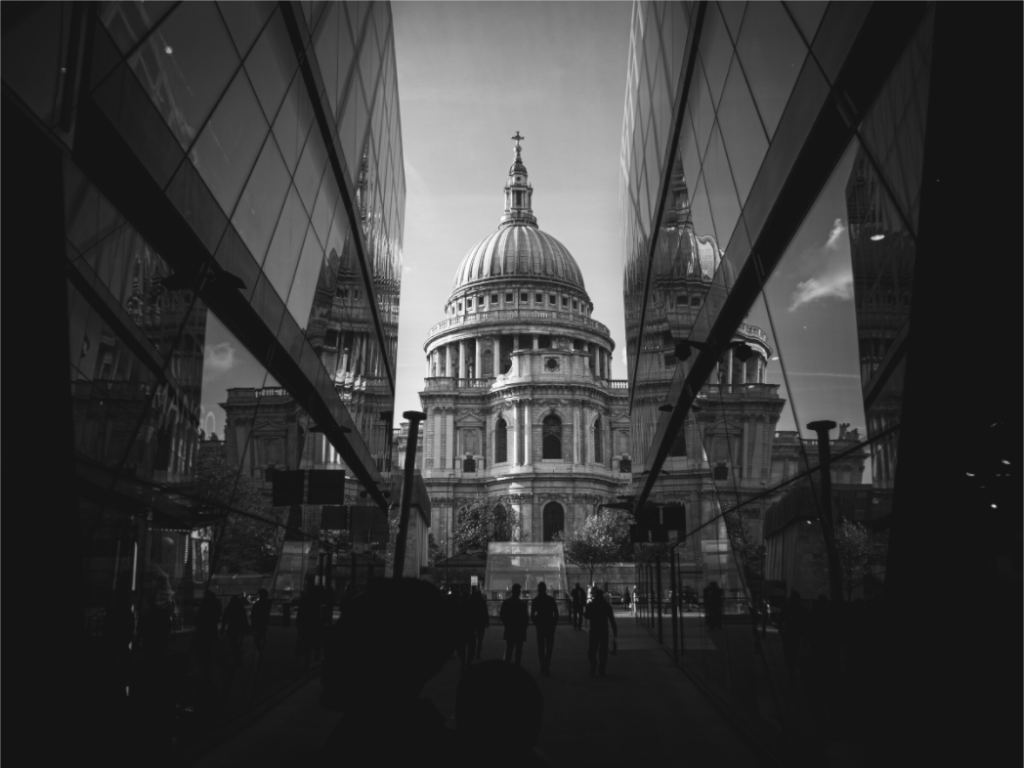
Symmetry & Stone
Othervariant black and white, london available in multiple sizes and configurations.
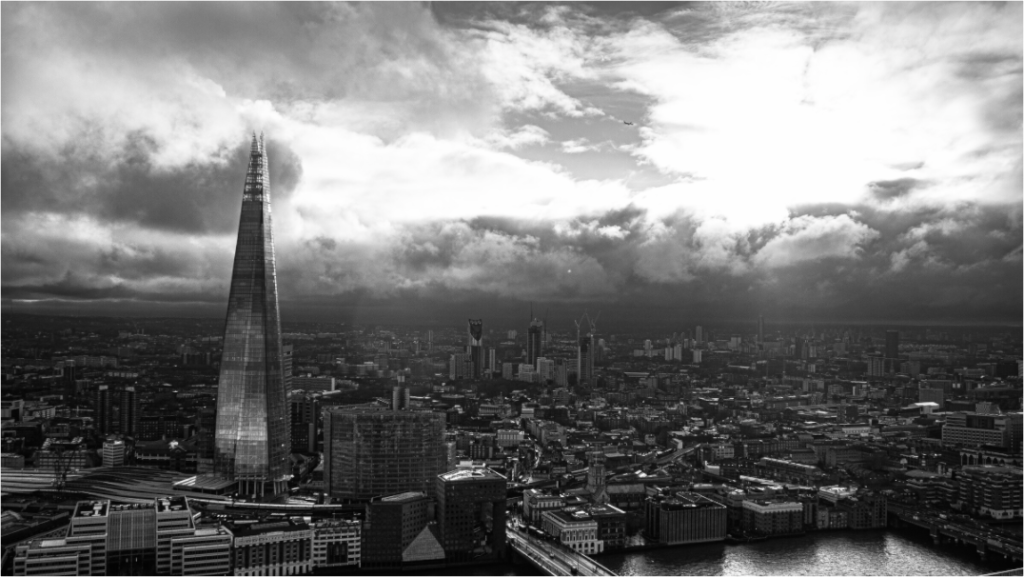
The Shard from Sky Garden
Othervariant london available in multiple sizes and configurations.
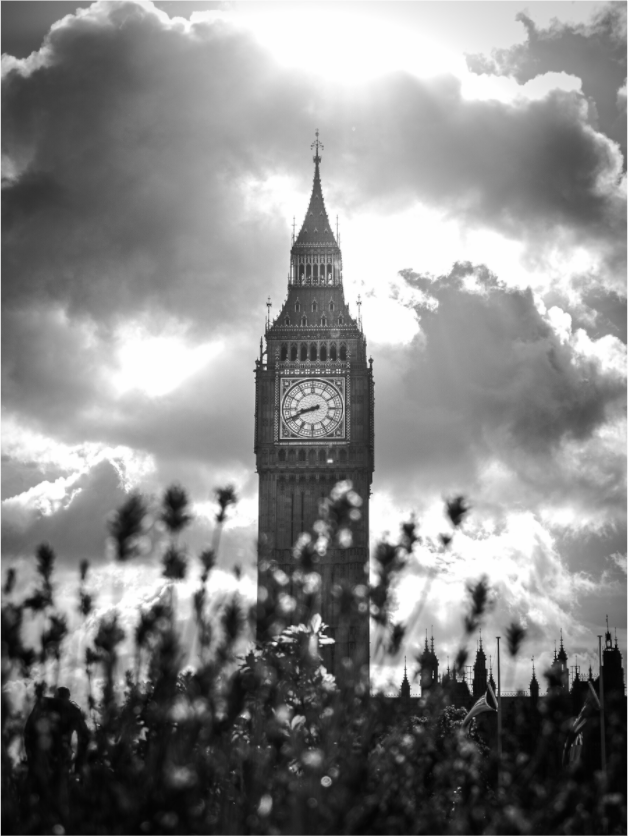
Big Ben Through Wildflowers
Othervariant black and white, london available in multiple sizes and configurations.