
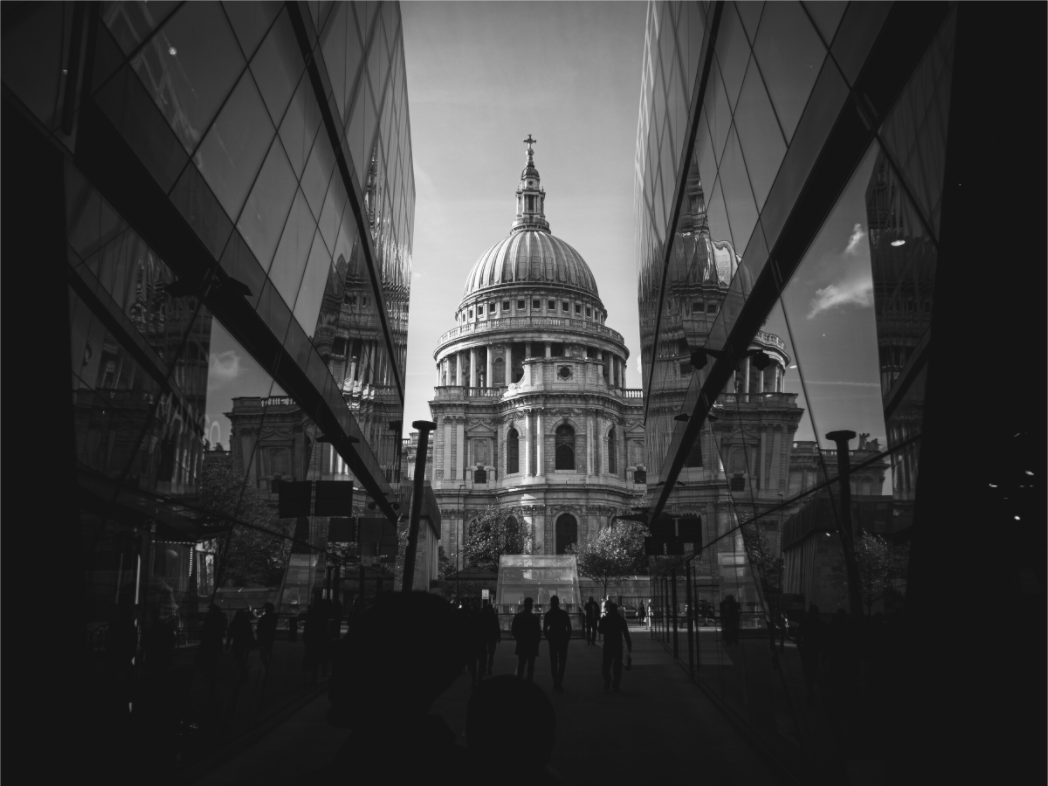
Framed wall art and canvas prints can both fill a wall, but they do not say the same thing. If you are buying photography rather than decorative graphics, the choice matters because the material changes how the image feels.
Canvas has become common because it is easy to hang, often cheaper at large sizes, and has a familiar home-decor look. Framed photographic prints feel quieter and more deliberate. Neither is automatically right, but for fine art photography, framed paper prints usually protect more of what makes the image worth living with: detail, tonal control, border, surface, and a sense of permanence.
Canvas gives texture, but it can soften the photograph
Canvas has a woven surface. That texture can suit painterly images, graphic art, or casual family photographs, but it can interfere with subtle photography. Fine lines, soft gradients, mist, architecture, and black and white tones can lose precision when the image is printed onto fabric.
This does not mean canvas is bad. It can work in relaxed rooms, rented spaces, or large decorative settings where the image is more about impact than detail. But if the photograph depends on shadow, paper-like tonal transitions, or architectural sharpness, canvas may make it feel less refined.
Framing gives the photograph room to breathe
A framed print creates separation between the image and the wall. The mount, border, glass, and frame all help the viewer read the photograph as an object rather than wallpaper. This is especially useful for quiet images, because they do not always win by being loud. They win by holding attention slowly.
Black and white photography often benefits from a frame because the edge matters. A thin black frame can sharpen the contrast. A white mount can make the print feel lighter. A wood frame can soften a darker image and help it sit in a warmer room.
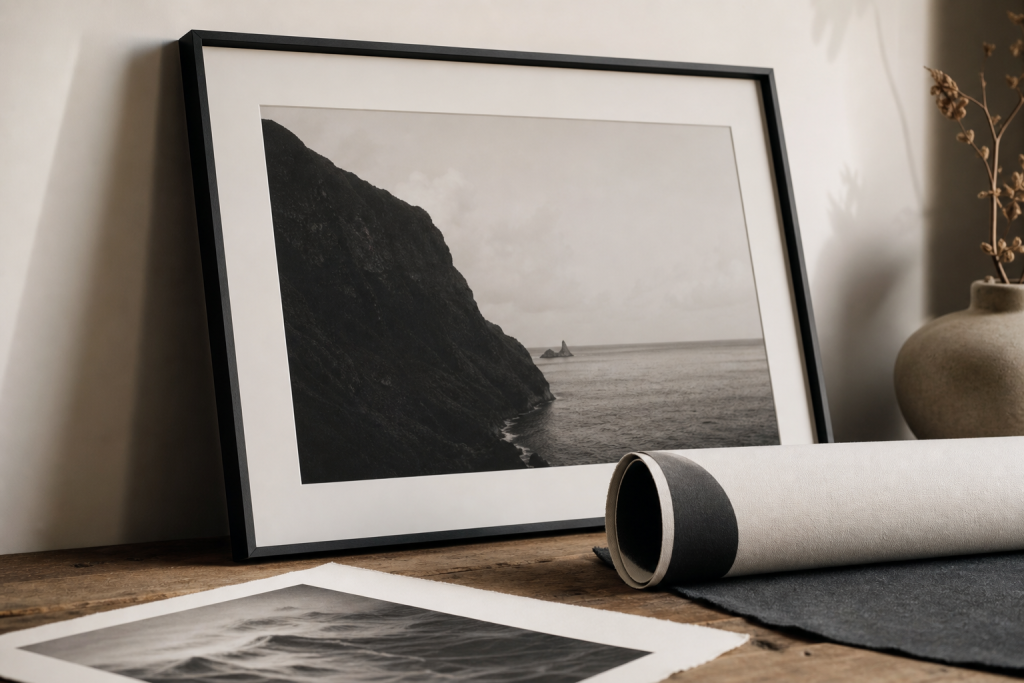
Paper matters more than people think
When you buy a photographic print, you are also buying a surface. Matte fine art paper handles light differently from glossy paper or canvas. It reduces glare, softens reflections, and gives shadows a more tactile quality. In a real room, where light changes throughout the day, this makes a difference.
A good paper print can feel calmer because it does not fight the room. It absorbs attention instead of bouncing it back. This is one reason gallery-style framed prints often suit bedrooms, living rooms, studies, and hallways where you want atmosphere rather than visual noise.
Which looks better in modern interiors?
Modern interiors often rely on clean lines, natural materials, and fewer decorative objects. In those spaces, framed photography usually feels more intentional than canvas. It can echo window frames, furniture lines, shelving, or architectural details. It also gives a room a finished focal point without adding too much texture.
Canvas can still work in informal rooms, but it can sometimes feel less premium when paired with stone, linen, oak, metal, or minimal furniture. A framed photograph has a quieter relationship with those materials.
When canvas still makes sense
Canvas may be the right choice if you want a very large piece on a limited budget, if the image is bold and simple, or if the room is casual enough that the texture feels natural. It can also work in children’s rooms, holiday homes, or spaces where durability and lightness matter more than fine detail.
But for London architecture, black and white street scenes, misty landscapes, and images with subtle tonal shifts, framed paper is usually the safer long-term choice. It respects the photograph rather than turning it into general decor.
Consider glare and daily light
One practical difference between framed wall art and canvas is how each behaves in real light. A glossy surface can create reflections opposite a window. Canvas can avoid some glare, but its texture may catch dust and flatten delicate details. A matte photographic paper behind good glazing usually gives the most balanced result for a living room or study.
Before choosing the finish, think about where the print will hang. A bright room may need a quieter matte surface. A darker hallway may benefit from a strong black and white image with enough contrast to hold the wall. The material should serve the photograph, not compete with it.
What feels more timeless?
Canvas often follows a decorative trend cycle. It can feel relaxed and accessible, but it can also make a serious photograph feel more casual. Framed paper has a longer visual history. It belongs to galleries, books, archives and collections, which gives even a simple home print a sense of care.
If the image is something you want to keep, frame it. If the image is mainly there to fill space for now, canvas may be enough. That distinction is blunt, but useful.
If you are choosing photography for a room that should feel calm, sharp and grown-up, start with framed prints rather than canvas.