
The Fujifilm X100VI gets attention because it makes photography feel easy to carry again. That matters beyond camera reviews. Small cameras change what people photograph, and those ordinary noticed moments can become some of the most interesting wall art.
The Fujifilm X100VI is usually discussed as a camera: sensor, lens, autofocus, film simulations, availability, price. That is useful if you are trying to buy one. But the more interesting question is why this kind of camera has become so magnetic in the first place.
Part of the answer is simple. A small fixed-lens camera removes friction. You can take it on a walk without feeling like you are carrying a project. You can photograph a wet street, a bus in evening light, a building edge, a person crossing a bridge, or a quiet corner of a city without making the moment feel heavy.
That is also why the X100VI conversation belongs near printmaking. The best wall art is not always the most dramatic scene. Sometimes it is the photograph that came from noticing something ordinary before it disappeared.
Why the Fujifilm X100VI became more than a camera
The X100VI sits in a strange place. It is expensive and hard to find, but it still feels simple in concept: one body, one fixed lens, a classic shape, and a look people recognise quickly. It has become a camera people want to carry, not only a camera people want to test.
That difference matters. A technically excellent camera that stays at home makes no photographs. A smaller camera that comes with you creates chances: morning light on a shopfront, reflections after rain, a quiet building facade, a street corner that feels like a memory before you understand why.
This is where the X100VI becomes culturally interesting. It points to a type of photography that is less about access to perfect locations and more about attention.
Everyday photography makes better prints than people expect
Many people imagine wall art as something grand: mountains, landmarks, dramatic skies, perfect sunsets. Those can work beautifully. But a home does not always need a photograph that announces itself from across the room.
A quieter print can do something different. It can hold atmosphere. It can give a room a sense of place without turning the wall into a postcard. It can make a familiar city feel personal instead of generic.
That is why compact-camera photography often translates well to prints. The images tend to come from being present. Noticing. Walking. Waiting for small pieces of light and movement to line up.
Less performance
A small camera can make photography feel less like an event. That can lead to images that feel more natural and less staged.
More repetition
Because the camera is easier to carry, it encourages returning to the same streets, bridges, buildings, and light. That repetition builds stronger seeing.
Better attention
A fixed lens forces choices. You move your feet, wait, crop with your position, and notice what actually belongs in the frame.
Why small-camera images suit London especially well
London rewards walking. The city changes quickly from one street to the next: stone, glass, buses, bridges, river light, office towers, old churches, wet pavements, and sudden gaps of sky. A heavy camera setup can still capture all of that, but a smaller camera often changes the relationship.
You stop hunting only for landmarks. You start noticing the spaces between them.
A print like St. Pancras at Quarter to Five works because it is not only about the building. It is about timing, colour, structure, and the feeling of the city moving around it. That is the kind of photograph a compact camera mindset encourages, even if the final image was made with different equipment.
The fixed lens is part of the appeal
The X100VI has a fixed lens, which sounds limiting until you understand why people like it. Limitation can make photography clearer. Instead of deciding between many lenses, you learn one field of view deeply. You start to understand what it includes, what it excludes, and how close you need to be.
For wall art, that consistency can help. A fixed-lens way of seeing often produces images with a human distance. Not too detached. Not too compressed. Close enough to feel present, but still wide enough to show context.
| Camera habit | How it can shape a print |
|---|---|
| Carrying a small camera daily | More ordinary moments, more lived-in atmosphere. |
| Using one focal length | A consistent, human-feeling perspective. |
| Photographing while walking | More street rhythm, reflections, transitions, and small details. |
| Reacting quickly to light | Images that feel less planned and more observed. |
But the camera is not the point
The X100VI is not magic. No camera turns weak seeing into a strong photograph. It can make photography easier to practise, but it cannot decide what matters in the frame.
That is the distinction worth keeping. The camera may create the habit. The print comes from the habit becoming attention.
If you are drawn to the X100VI because of its look, size, or everyday feel, you may also be drawn to wall art that has the same qualities: quiet colour, city atmosphere, small details, and scenes that feel discovered rather than staged.
Choosing wall art with the X100VI mindset
When choosing a photography print, it can help to think less like a shopper and more like a person walking with a camera. What would have made you stop? A line of light? A building shape? A reflection? A colour that only existed for a few minutes?
That is often where the better print is hiding. Not in the loudest image, but in the one that keeps its atmosphere after the first glance.
For a more technical camera angle, the earlier guide to Fujifilm X100VI alternatives compares the camera against other options. This article is about the visual habit the camera represents, and why that habit can create better photographs for the wall.
Explore everyday city photography as wall art
If you like compact-camera energy, quiet streets, evening light, architecture, and small observed moments, start with the current London photography collection.
Print mentioned in this article
A quick visual reference for the Othervariant print linked above.
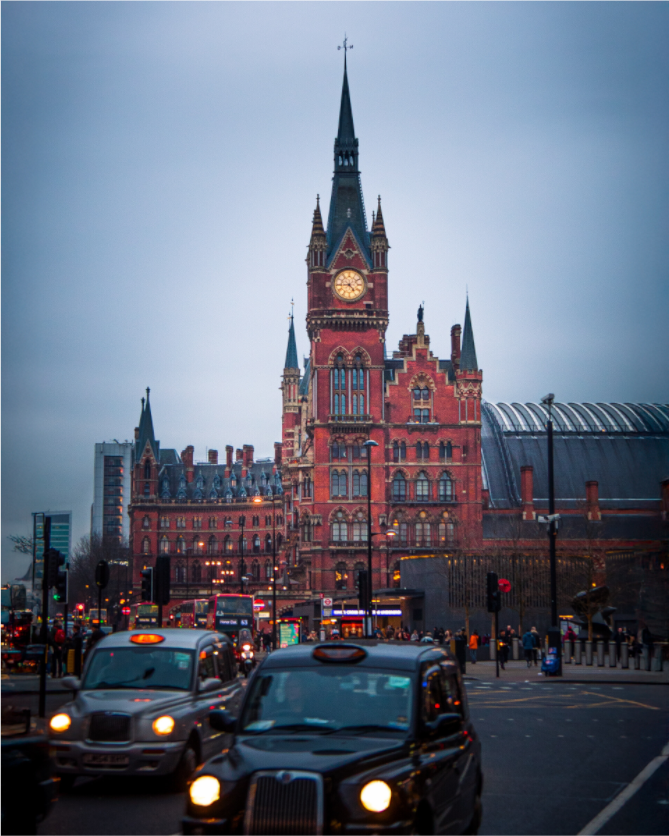
St. Pancras at Quarter to Five
Othervariant london available in multiple sizes and configurations.