Skip to content
Othervariant

London Through a Lens: Seven Places Worth Shooting

London doesn’t stop long enough for you to miss it. That’s the problem and the opportunity.

The city is always moving — buses, commuters, weather that shifts three times before noon. But the same qualities that make it difficult to photograph are what make the results worth having. London rewards patience and early starts. It punishes tourists with cameras who show up at midday expecting the postcard.

Here are seven places worth your time, and what to look for at each.

St. Paul’s Cathedral — One New Change Rooftop

Most people photograph St. Paul’s from street level, fighting buses and scaffolding. The better shot is from the rooftop walkway of One New Change — the shopping centre directly east. From up there, the dome and twin towers line up in near-perfect symmetry against whatever sky you’re given. Clear October afternoon with low sun: the stone goes warm amber. Overcast: the geometry becomes the point. Either works.

→Symmetry & Stone — St. Paul’s Cathedral Print

Peter’s Hill — After Rain

Stand on Peter’s Hill on a wet evening — the pedestrian street running south from St. Paul’s — and wait for a bus. The puddles reflect the dome and the amber street lights coming on. It’s one of those London photographs that only works when the conditions are exactly wrong by most measures: cold, damp, fading light. Bring the right lens and you’ll have something nobody else gets in sunshine.

→ St. Paul’s Cathedral at Dusk Print

Westminster Bridge — Early Morning

Arrive before 9am on a weekday. The bridge is almost empty. The green ironwork runs across the frame, Big Ben lit from within on the far side, the Thames reflecting the early sky in long horizontal bands. By 9:30am the bus tours start and the composition fills with people. You have a narrow window. Use it.

→ Westminster Bridge at Dawn Print

Parliament Square Garden — Cherry Blossom Season

For roughly two weeks in late March or early April, Parliament Square Garden has cherry blossom at eye level with the Elizabeth Tower behind it. The window is short and weather-dependent. Shoot at 4pm when the westerly sun hits the stone and turns it amber — the blossoms go backlit and translucent. The frame essentially builds itself.

→ Big Ben in Cherry Blossom Print

Tower Bridge — South Side, 9am

The classic view from the south bank is worth doing properly: shoot from Potters Fields or near City Hall, full span, water in the foreground. The best light is morning — the sky clears from the east and the bridge catches warm tones. Alternatively, walk onto the south side of the bridge itself and shoot straight up along the suspension cables toward the north tower. You stop seeing a bridge and start seeing engineering.

→ Tower Bridge at Golden Hour Print
→ Tower Bridge Steel Print

Tate Modern — The Shard View

The Sky Garden at 20 Fenchurch Street is free and well-known, but the Tate Modern balcony is often overlooked. At 5:30pm in winter, you catch The Shard at the exact moment the city switches from daylight to artificial light — the sky goes lavender and peach, the building’s lower floors light up warm amber while the top stays dark against the clouds. Fifteen minutes either side of that and the shot changes completely.

→ The Shard at Twilight Print

Lambeth Bridge — London Eye

Less photographed than Westminster or Waterloo Bridge, Lambeth Bridge sits slightly further south and gives a clean, unobstructed view of the London Eye against the sky. Early morning in clear weather, the wheel catches golden light while the sky grades blue to warm gold. The composition is minimal — which is exactly the point.

→ The Wheel at Twilight — London Eye Print

London is a city built to be photographed. The architecture, the weather, the river — it all conspires to produce images that are impossible to replicate anywhere else. You just have to show up at the right time and stay longer than feels comfortable.

All prints from these locations are available at The Othervariant — printed to gallery standard by WhiteWall, archival quality, ready to hang.
Beyond the Backorder: A Technical Guide to Choosing the Best Fujifilm X100VI Alternatives

The Fujifilm X100VI has achieved a status rarely seen in digital imaging: it is a viral phenomenon that is perpetually out of stock. For enthusiasts, the allure is clear—a 40MP APS-C sensor, 5-axis In-Body Image Stabilization (IBIS), and the legendary hybrid viewfinder, all wrapped in a heritage design. However, availability issues have forced many photographers to look elsewhere.


Finding a true alternative requires understanding what specific aspect of the X100VI appeals to you. Is it the leaf shutter and compactness? The tactile dial-based controls? Or the specific 35mm full-frame equivalent focal length? Many photographers are now scouring the market for cheaper alternatives to Fujifilm X100VI that offer similar performance without the scalper markups or indefinite wait times. This guide dissects the market to help you choose the right tool based on technical merit and real-world application. See our [Camera Buying Guide](https://example.com/camera-buying-guide) for a broader look at current market trends.


1. The Pocketable Street King: Ricoh GR IIIx


If your primary draw to the X100VI is street photography and portability, the Ricoh GR IIIx is arguably a superior tool. It is also one of the few genuinely cheaper alternatives to Fujifilm X100VI that does not compromise on professional image quality. While the X100VI is “compact,” the GR IIIx is truly pocketable.


Technical Deep Dive

Unlike the X100VI’s 40MP X-Trans CMOS 5 HR sensor, the Ricoh utilises a 24MP APS-C Bayer sensor. While the resolution is lower, the lens sharpness of the GR IIIx’s 26.1mm f/2.8 (40mm equivalent) is legendary, often resolving detail across the frame better than Fuji’s 23mm f/2 at wide-open apertures. Furthermore, the Ricoh features Snap Focus, a zone-focusing implementation that bypasses autofocus lag entirely by locking focus at a pre-set distance (e.g., 2.5 meters). For those interested in [Street Photography Techniques](https://example.com/street-photography-tips), this captures moments the X100VI’s autofocus might miss.


Real World Example: In a crowded market environment, the X100VI requires you to raise the camera to your eye or rely on the tilting screen, signaling your intent. The Ricoh can be operated one-handed, allowing for discreet shooting from the hip with zero shutter lag when using Snap Focus.


2. The Tactile Experience: Nikon Zf


For those who crave the X100VI for its aesthetics, brass dials, and the physical joy of photography, the Nikon Zf is the most robust alternative. While not strictly cheaper once you add a lens, it offers a value proposition that rivals the inflated resale prices of the Fuji.


Technical Deep Dive

The Nikon Zf moves you from APS-C to Full Frame (FX), offering a 24.5MP BSI CMOS sensor. While the pixel count is lower than the Fuji, the dynamic range and high-ISO performance of the Zf’s full-frame sensor are technically superior, particularly past ISO 6400. You can read more about sensor differences in our [Full Frame vs APS-C Comparison](https://example.com/sensor-size-comparison). The Zf also incorporates the Expeed 7 processor, derived from the pro-level Z9, offering 3D Tracking autofocus that sticks to subjects more reliably than Fujifilm’s current algorithm.


Trade-offs: The Zf is significantly heavier and lacks a built-in leaf shutter. You lose the high-speed flash sync capabilities of the X100VI (1/4000s vs. 1/200s on the Nikon), but you gain access to the entire Z-mount lens ecosystem and adapted vintage glass.


3. The Premium Path: Leica Q3


If budget is less of a constraint than availability, the Leica Q3 is the ultimate fixed-lens compact camera. While most users land on this page looking for cheaper alternatives to Fujifilm X100VI, it is important to acknowledge the Q3 as the “aspirational alternative” that essentially takes every spec of the X100VI and upgrades it to the highest tier.


Technical Deep Dive

The Q3 boasts a 60MP Full-Frame BSI sensor, offering massive cropping potential. Its fixed Summilux 28mm f/1.7 ASPH lens is optically superior to the X100VI’s optics, rendering micro-contrast that is distinct to Leica. While the X100VI uses film simulations, the Leica color science is baked into the DNG files, requiring less post-processing for a natural look. However, the 28mm focal length is wider than the X100VI’s 35mm equivalent, forcing a different compositional approach.


Side-by-Side Technical Comparison


To help you visualize the trade-offs, here is a direct comparison of the critical specifications.


| Feature | Fujifilm X100VI | Ricoh GR IIIx | Nikon Zf (w/ 40mm f/2) | Leica Q3 |


| :— | :— | :— | :— | :— |
| Sensor Size | APS-C | APS-C | Full Frame | Full Frame |


| Resolution | 40.2 MP | 24.2 MP | 24.5 MP | 60.3 MP |
| Lens | 23mm f/2 (35mm eq) | 26.1mm f/2.8 (40mm eq) | Interchangeable | 28mm f/1.7 (Fixed) |


| Stabilization | 5-Axis IBIS (6 stops) | 3-Axis Shake Reduction | 5-Axis IBIS (8 stops) | Optical + Digital |
| Shutter Type | Leaf Shutter | Leaf Shutter | Focal Plane | Leaf Shutter |


| Weight | 521g | 262g | ~710g (body only) | 743g |


How to Choose the Right Alternative


1. If you need portability above all else*: Buy the **Ricoh GR IIIx**. It is the only camera on this list that fits in a jeans pocket. The lens sharpness compensates for the lower resolution, making it one of the best *cheaper alternatives to Fujifilm X100VI on the market today.


2. If you want the “Retro” shooting experience*: Buy the *Nikon Zf. The manual controls for ISO, shutter speed, and exposure compensation provide the same tactile satisfaction as the Fuji, with better low-light performance.


3. If you need a compact Interchangeable Lens Camera (ILC)*: Consider the *Sony A7C II. While it lacks the “soul” and retro styling of the Fuji, its autofocus and full-frame sensor in a compact body make it a technical powerhouse for hybrid shooters. Check out our [Best Mirrorless Cameras](https://example.com/best-mirrorless-cameras) list for more ILC options.


While the X100VI is a masterpiece of convergence—blending size, style, and specs—it is not the only camera capable of capturing your vision. By identifying whether you prioritize the sensor format, the physical size, or the shooting experience, you can find an alternative that is available today and perhaps better suited to your specific photographic needs.

The Sony a7 V Has Arrived: Is It the New King of Hybrids?

The Sony a7 V Has Arrived: Is It the New King of Hybrids?

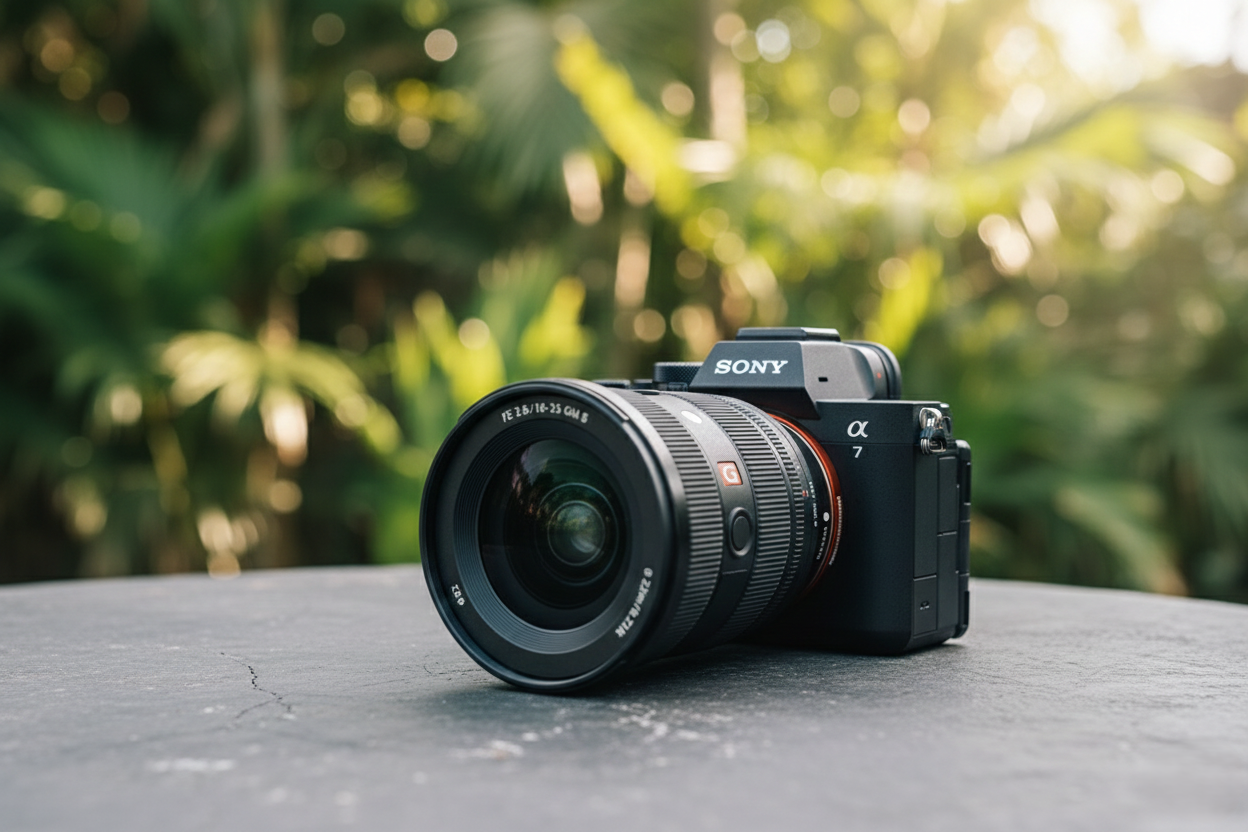
While Canon recently grabbed headlines with the R6 Mark III, Sony has officially answered back. The newly released Sony a7 V ($2,899) might look familiar on the outside, but under the hood, it packs enough punch to be a serious contender for the best all-around mirrorless camera of 2025.

Here is a breakdown of what makes this camera special and how it stacks up against the fierce competition.

Design and Handling: If It Ain’t Broke…

Visually, the a7 V is nearly identical to its predecessor, the a7 IV. It keeps the same control layout, grip, and weather sealing, which is great news for upgraders who want a familiar feel.

  • What’s New: The biggest physical change is the rear LCD, which now adopts the fully articulating 4-axis mechanism from the a7R V—a huge win for video shooters.

  • Connectivity: You now get twin USB-C ports (one for data, one for PD charging), though it oddly sticks to the single CFexpress Type A / SD hybrid slot configuration rather than dual hybrid slots.

  • Battery Life: Thanks to the efficient new Bionz XR2 processor, battery life has jumped significantly to roughly 630 shots (CIPA), effectively solving one of the previous generation’s minor gripes.


Image 1: The new 4-axis articulating screen on the Sony a7 V.

The Internals: Speed Meets Resolution

The magic of the a7 V lies in its new 33-megapixel partially stacked CMOS sensor. Unlike fully stacked sensors found in flagship sports cameras, this “partial” stack offers a sweet spot between performance and price.

  • Image Quality: Despite the speed increase, dynamic range has actually improved over the a7 IV.

  • Burst Shooting: The mechanical shutter still tops out at 10 fps, but switch to the electronic shutter and you can hit a blistering 30 fps with full AF/AE tracking.

  • Buffer: The buffer is virtually bottomless in mechanical mode, though it hits a limit of around 75 frames when shooting at max speed electronically.


Image 2: A visualisation of the new 33MP partially stacked CMOS sensor and AI Processing Unit.

Autofocus: AI Takes the Wheel

Sony has finally integrated a dedicated AI processing unit into the a7 line (previously two separate chips). This results in:

  • Better Subject Recognition: Beyond faces and eyes, it now tracks torsos and limbs, making it stickier for sports and erratic movement.

  • Pre-Capture: A welcome addition, this feature buffers up to one second of action before you fully press the shutter, ensuring you never miss the critical moment.


Video Capabilities: Fast but Not Flawless

For filmmakers, the a7 V is a massive upgrade in usability, even if it lacks some “on-paper” specs found in rivals like the Nikon Z6 III or Panasonic S1 II.

  • The Good: Rolling shutter is virtually non-existent thanks to a ~10ms readout speed. You get 4K/60p with zero crop and 4K/120p with an APS-C crop. Overheating is also a non-issue; tests showed it recording 4K/60p for two hours straight without a fan.

  • The Bad: It surprisingly lacks Open Gate recording and cannot shoot video higher than 4K (no 6K or 7K downsampling options). It also lacks internal RAW video support.

  • Stabilisation: While improved, the IBIS still lags behind Panasonic. The “Dynamic Active” mode smooths things out but applies a heavy crop.

The Verdict

The Sony a7 V doesn’t reinvent the wheel, but it polishes it to a mirror shine. While the Canon R6 III offers slightly better hybrid versatility and the Nikon Z6 III has raw specs on its side, the a7 V’s combination of a 33MP sensor, incredible autofocus, and vast lens ecosystem makes it a powerhouse.

If you’ve been waiting to upgrade from an older Sony body, the wait is over. The a7 V isn’t just a comeback; it’s a statement that Sony is still at the top of the game.


South of the River: 10 Unmissable Photography Spots in South London

South of the River: 10 Unmissable Photography Spots in South London

Most photographers assume the definitive postcard shots of the capital are clustered around Westminster or the City. They are mistaken. Cross the Thames, and you trade the sterile tourist traps for grit, texture, and some of the most dramatic elevation changes the city has to offer. South London isn’t just a residential sprawl; it is a goldmine for visual storytellers looking for atmosphere over clichés and seeking the finest photography spots South London has to offer.


Whether you are chasing the golden hour over Canary Wharf or hunting for brutalist shadows, the south provides a canvas that demands attention. Here is a curated breakdown of the top 10 photography spots in South London where you can capture the soul of the city.


1. Greenwich Park: The Classic Vista


If you want the best views of London from South London, you head to the Royal Observatory. It is steep, iconic, and undeniably worth the climb. The composition here practically builds itself: the Queen’s House in the foreground provides classical symmetry, leading the eye across the river to the futuristic glass towers of Canary Wharf.


Pro Tip: Bring a telephoto lens (70-200mm). While the wide shot is famous, compressing the distance between the historic maritime buildings and the modern skyscrapers creates a powerful juxtaposition of eras [#1](https://www.royalparks.org.uk/parks/greenwich-park).


2. Battersea Power Station: Industrial Renaissance


For decades, this brick behemoth sat decaying. Now, it stands as a shining example of industrial regeneration. The Art Deco architecture offers endless geometric patterns, while the interiors—specifically the lift inside the chimney—offer a 360-degree perspective.


Focus on the details here. The texture of the brickwork against the sleek new glass surrounding it tells a story of survival and adaptation. It is easily one of the most dynamic photography spots South London has gained in the last five years.


3. Nunhead Cemetery: The Gothic Mood


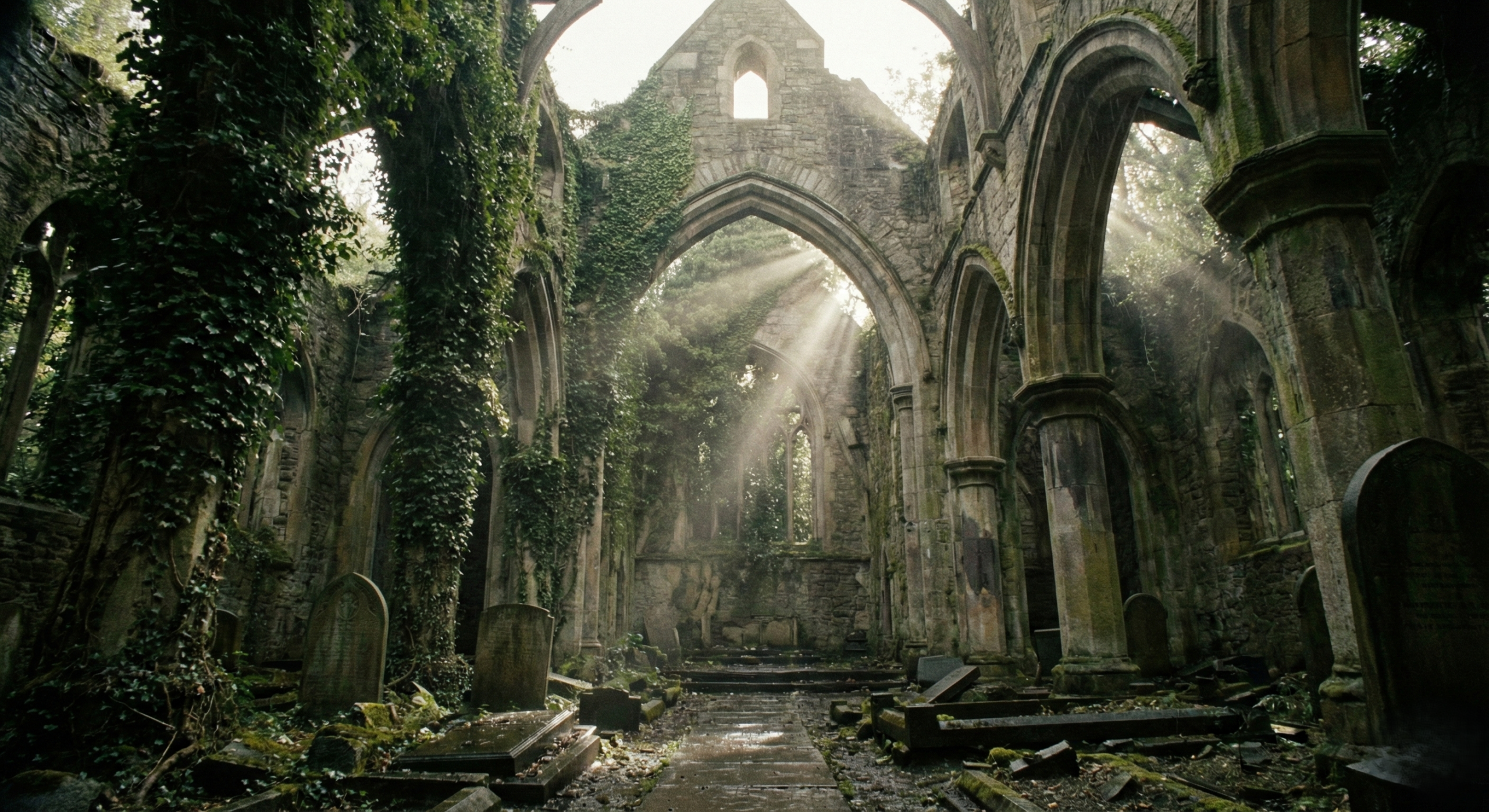
Part of the ‘Magnificent Seven’ cemeteries, Nunhead is less manicured than Highgate and infinitely more atmospheric. It is overgrown, wild, and hauntingly beautiful. The ruins of the Anglican chapel, roofless and reclaimed by ivy, provide a perfect setting for moody, ethereal portraiture.


Best visited on an overcast day or early morning when the fog clings to the Victorian tombstones. The light filtering through the dense canopy creates natural gobos that dance across the graves.


4. The South Bank & National Theatre: Brutalist Dreams


Concrete gets a bad rap, but for black and white architecture photography, the National Theatre is unparalleled. The sharp angles, deep shadows, and rough textures respond magnificently to high-contrast editing.


This stretch of the Thames Path also offers excellent street photography opportunities. You have skaters, book markets, and the constant flow of Londoners moving against the backdrop of the river. It’s dynamic and raw.


5. Richmond Park: Wilderness in the City


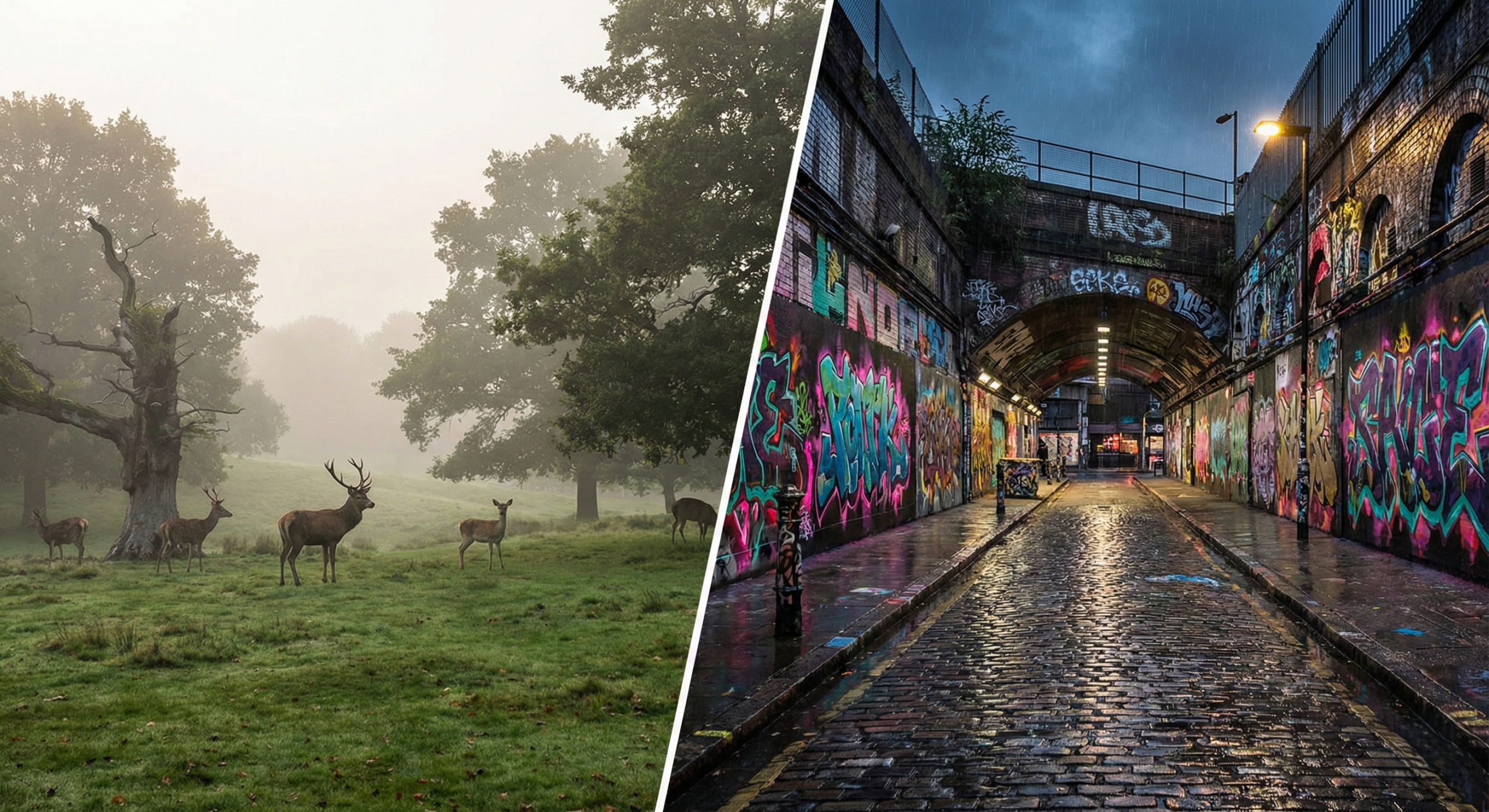
You forget you are in London the moment you step into Richmond Park. Famous for its red and fallow deer, this is the premier spot for wildlife enthusiasts.


Warning:* Respect the wildlife. Keep your distance (at least 50 meters) and use a long lens—400mm or longer is ideal here. The Isabella Plantation within the park offers a completely different vibe, exploding with azaleas and rhododendrons in spring, making it one of the most colorful *instagrammable places South London has to offer [#2](https://www.royalparks.org.uk/parks/richmond-park).


6. Frank’s Cafe / Peckham Levels: The Urban Skyline


Forget the Shard. For a view that feels accessible and young, head to the roof of the multi-story car park in Peckham. The famous pink stairwell at Frank’s Cafe is a visual hook in itself, but the panoramic view of the London skyline from the south is the real prize.


This location screams ‘cool’. The crowd is trendy, the architecture is utilitarian, and the sunset hits the distant city center perfectly. It’s casual, gritty, and arguably one of the most visually interesting instagrammable places South London possesses.


7. Leake Street Arches: The Graffiti Tunnel


Hidden beneath Waterloo station, this authorized graffiti tunnel is constantly changing. What you shoot today might be painted over tomorrow. It is dark, smelling of spray paint, and visually chaotic in the best way possible.


Lighting Advice: It’s dark. You will need a fast prime lens (f/1.8 or lower) or a portable LED panel. Flash can kill the vibe here; try to balance the ambient neon with the tunnel’s gloom.


8. Crystal Palace Park: Dinosaurs and Decay


The Victorian dinosaur sculptures are famous for being anatomically incorrect, but they are historically fascinating. Beyond the dinos, look for the ‘Secret Garden’ and the Italian Terraces. The sphinxes guarding the stairs where the Crystal Palace once stood offer a melancholic grandeur that looks incredible in wide-angle shots.


9. Butler’s Wharf: The Framed Bridge


While tourists crowd the north side of Tower Bridge, the smart photographer stands at Butler’s Wharf on the south side. The historic warehouses create a natural leading line towards the bridge.


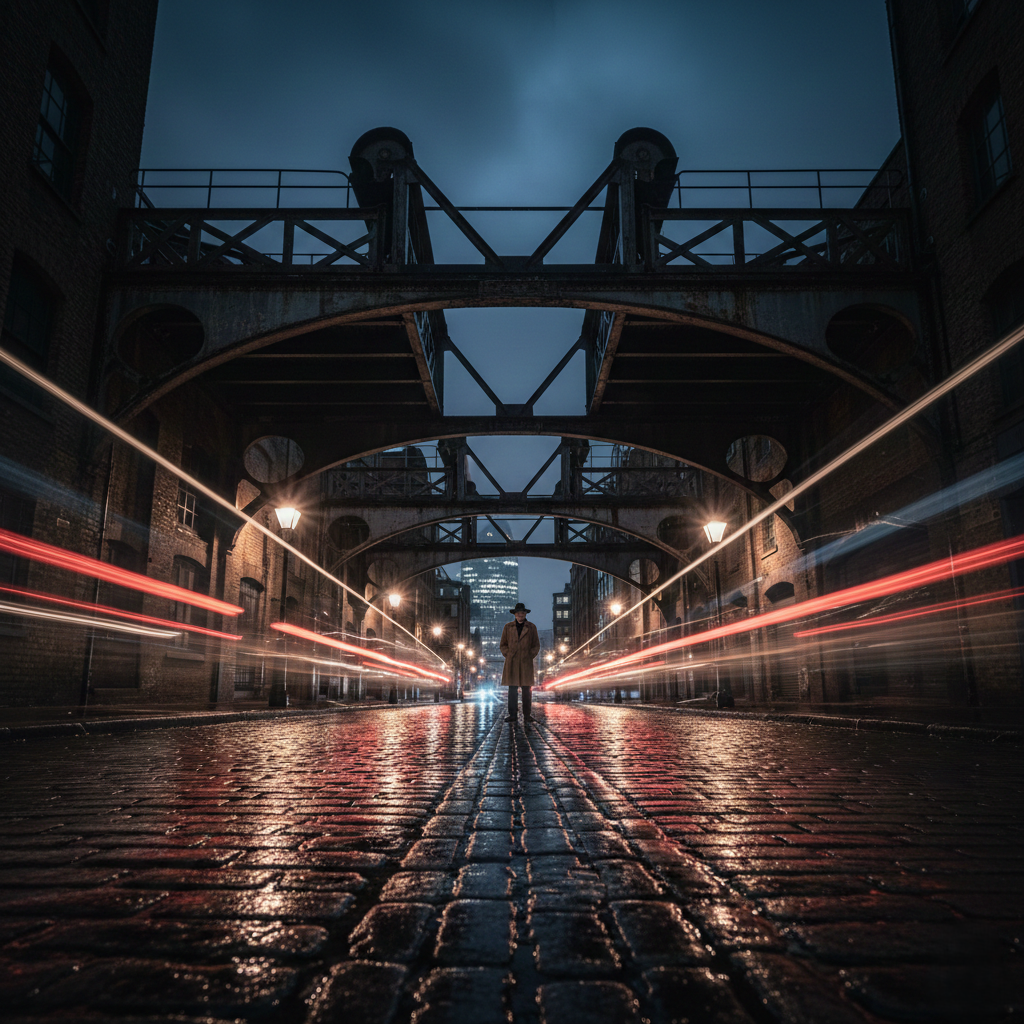
Walk further down to the cobbled streets of Shad Thames. The overhead gantries connecting the warehouses create dramatic shadows and lines that are perfect for architectural composition [#3](https://en.wikipedia.org/wiki/Shad_Thames).


10. The Horniman Museum: Victorian Eccentricity


Located in Forest Hill, the Horniman is a gem. The Victorian conservatory is a white, glass-and-iron structure that looks stunning against a blue sky. The gardens offer yet another sweeping view of the city skyline, often much quieter than Greenwich, making it a hidden contender for the best views of London from South London.


Quick Gear Guide for South London


Greenwich Park | Telephoto (70-200mm) | Sunrise/Sunset | Yes |
| Leake Street | Fast Prime (35mm f/1.4) | Night/Evening | No (too crowded) |
| Richmond Park | Super Telephoto (400mm+) | Golden Hour/Mist | Monopod helpful |
| South Bank | Wide Angle (16-35mm) | Mid-day (Shadows) | No |


South London demands you look a little harder, but the rewards are substantial. From the deer in the mist at Richmond to the spray-painted walls of Waterloo, the variety here is unmatched. Pack your bag, cross the river, and start shooting.

Unleashing the Power of Experiential Photography

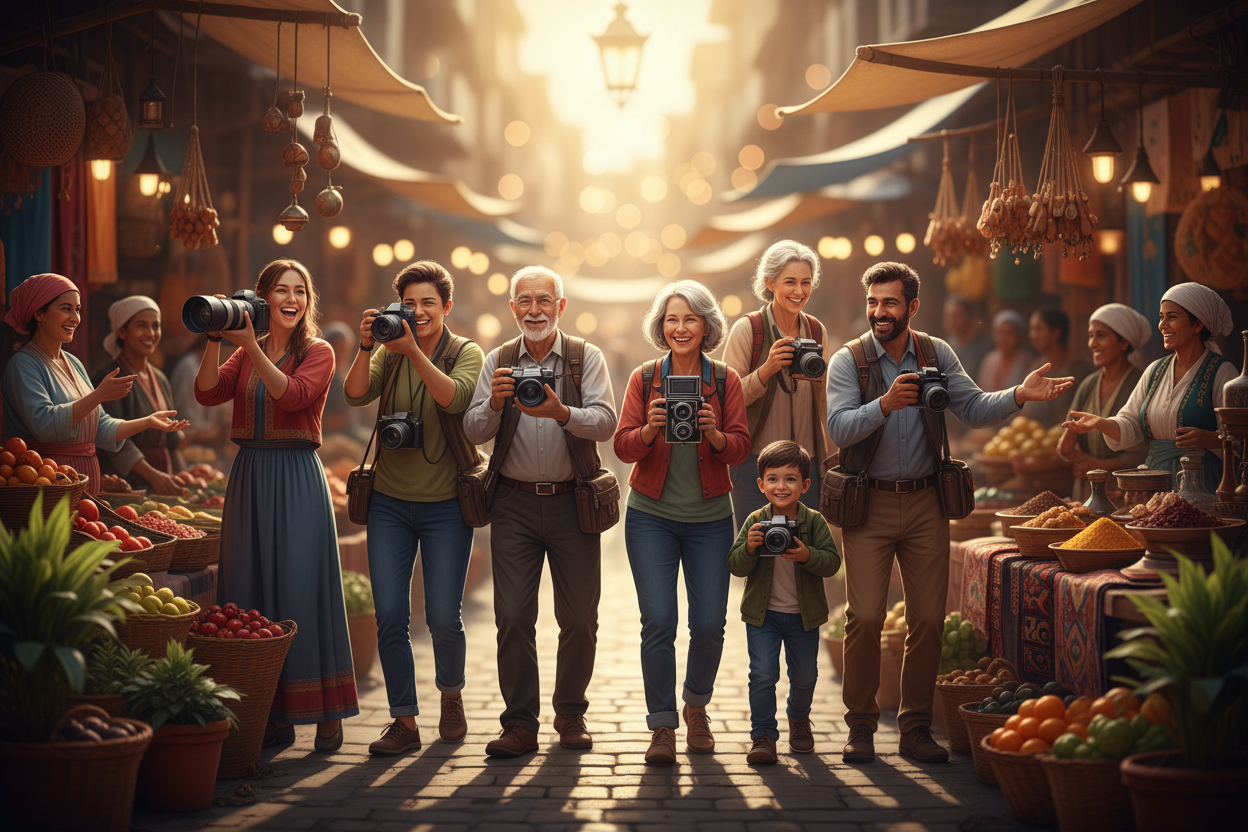
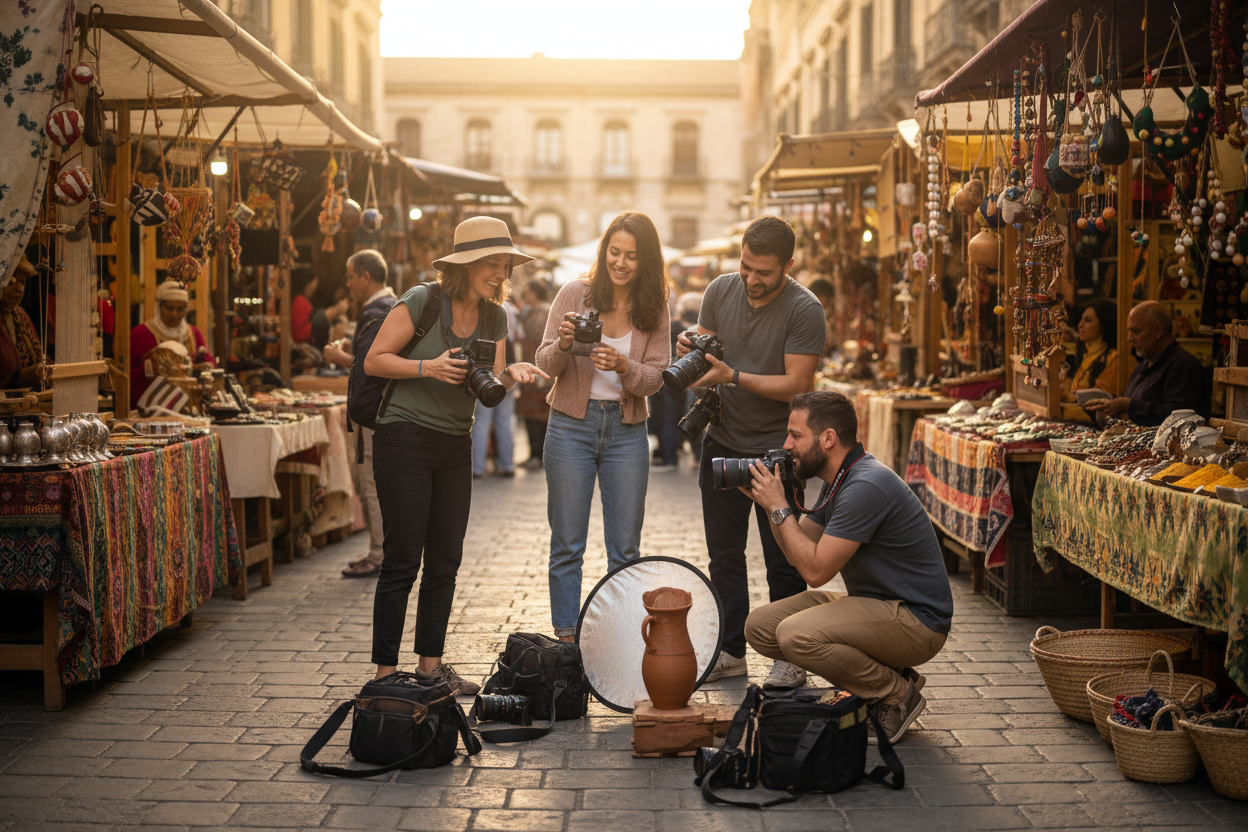
A diverse group of enthusiastic photographers, young and old, standing in a vibrant, sun-drenched street market, each holding a different type of camera. They are engaged, looking through viewfinders, and interacting with local vendors. The scene is full of color and life, with bokeh in the background. Style: Photorealistic, no text in image.

The Struggle with Static Learning

Ever felt like you’re drowning in tutorials and gear reviews, but your photography still isn’t clicking? You’ve watched countless videos, read endless articles, yet when you step out with your camera, that spark, that confidence, just isn’t there. It’s a common dilemma for budding photographers: the disconnect between theory and practice. The truth is, some things you just have to experience to truly understand.

Why Experiential Workshops Are Your Photography Breakthrough

That’s where experiential photography workshops* come in. These aren’t just classes; they’re adventures designed to immerse you in real-world shooting scenarios, pushing you beyond your comfort zone and igniting your creative vision. Imagine learning about light by actually chasing the golden hour in a bustling city, or mastering composition while capturing the intricate details of a vibrant cultural festival. These *immersive photo experiences provide immediate feedback, hands-on guidance, and a dynamic learning environment that a textbook simply can’t replicate. You’ll not only learn techniques but also develop that crucial photographer’s instinct.

Finding the Right Workshop for Your Journey

So, how do you pick the perfect one? It’s about aligning your interests with the workshop’s focus.

Identify Your Passion

Are you drawn to street photography, wildlife, portraiture, or perhaps architectural detail? Many workshops specialize. Some might focus on urban exploration, offering incredible opportunities for street photography and candid moments. Others could take you deep into nature, teaching landscape techniques or macro photography.

Research the Mentors

Who’s leading the workshop? Look for instructors whose work genuinely inspires you and who have a reputation for effective teaching. A great mentor doesn’t just demonstrate; they guide, challenge, and encourage your individual artistic voice. Don’t hesitate to check out their portfolios and read testimonials.

Consider the Format and Location

Workshops vary widely. Some are weekend intensives in your local area, while others are multi-day expeditions to exotic destinations. Think about what fits your schedule, budget, and learning style. Do you prefer small, intimate groups or a larger gathering? What kind of environment sparks your creativity most?

Preparing for Your Immersive Photo Experience

You’ve found your workshop—fantastic! Now, let’s get ready to make the most of it.

Gear Check (But Don’t Overpack!)

Bring the camera gear you’re most comfortable with. This isn’t the time to experiment with a brand-new, unfamiliar lens unless it’s specifically part of the workshop’s curriculum. A reliable camera body, a versatile lens (like a 24-70mm or 50mm prime), extra batteries, plenty of memory cards, and a comfortable camera bag are essentials. Don’t forget appropriate clothing for the location and weather!

Mindset Matters

Approach the workshop with an open mind and a readiness to experiment. Leave your perfectionism at the door. This is a learning experience, not a portfolio shoot. Be curious, ask questions, and embrace mistakes as opportunities for growth. Remember, every master was once a beginner.

Do Your Homework

If the workshop provides pre-reading or specific assignments, complete them. A little preparation can significantly enhance your understanding and allow you to hit the ground running. Familiarize yourself with the area you’ll be shooting in if possible; even a quick Google Maps tour can help you visualize opportunities.

Maximizing Your Learning On-Site

Once you’re there, it’s all about engagement.

Engage with Your Instructor

Don’t be shy! Your instructor is a valuable resource. Ask about their workflow, their creative process, and how they overcome challenges. Seek feedback on your shots; it’s one of the quickest ways to improve [#1](https://www.photographytips.com/articles/the-importance-of-feedback-in-photography).

Connect with Peers

One of the hidden gems of experiential photography workshops* is the community. Talk to your fellow participants. Share ideas, discuss challenges, and even swap tips. You’ll often find new perspectives and build lasting connections with people who share your passion. These connections can often lead to future *community photography projects.

Step Outside Your Comfort Zone

Try techniques you haven’t before. Shoot subjects you wouldn’t normally consider. The most significant breakthroughs often happen when you push your boundaries. If the instructor suggests a challenging angle or a difficult lighting situation, go for it! What’s the worst that could happen? You get a unique learning experience.

A small group of photographers collaborating on a community photography project, capturing portraits of local artisans in a vibrant market square. They are sharing gear, discussing angles, and helping each other. Style: Photorealistic, no text in image

Beyond the Workshop: Continuing Your Journey

The learning doesn’t stop when the workshop ends.

Practice, Practice, Practice

Apply the new skills and insights immediately. The more you practice, the more ingrained they become. Don’t let that newfound inspiration fade away. Make photography a regular part of your life.

Join Community Photography Projects

Many areas have local photography clubs or online groups that organize community photography projects. These are fantastic ways to continue shooting, receive peer feedback, and maintain that sense of camaraderie you found in the workshop [#2](https://www.communityartsprojects.org/benefits-of-group-photography). Whether it’s a photo walk, a themed challenge, or a collaborative exhibition, these projects keep your skills sharp and your passion alive.

Reflect and Refine

Regularly review your work from the workshop and beyond. What went well? What could you improve? What did you learn about yourself as a photographer? This reflective practice is crucial for long-term growth.

Your Path to Photographic Mastery

Embracing experiential photography workshops is more than just attending a class; it’s about investing in a transformative journey. It’s about seeing, feeling, and capturing the world in a way that truly resonates. So, are you ready to trade the screen for a lens and truly experience photography? Your most compelling images are waiting to be made.

Capturing Tomorrow: Embracing Sustainable Photography Practices

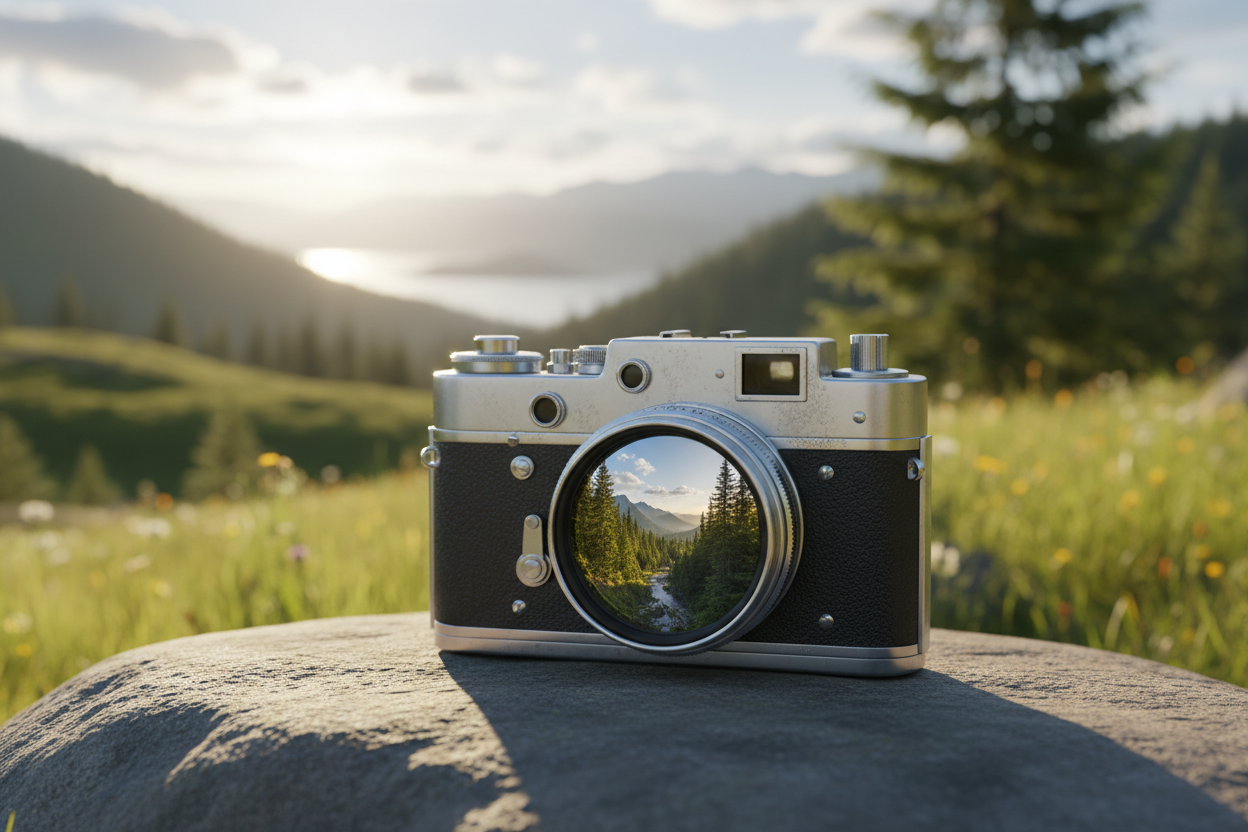
A minimalist, photorealistic shot of a vintage film camera with lens reflecting a pristine natural scene (forest or ocean), mean that it is outisde. symbolizing sustainability and growth. Soft, natural lighting. No text elements.

The constant pursuit of the next best shot, the latest gear, the farthest destination – it’s a familiar drive for any photography enthusiast. We chase light, moments, and stories with an insatiable curiosity. But have we ever paused to consider the silent cost of our passion? Every shutter click, every new piece of equipment, every digital file stored in the cloud carries an environmental footprint. This isn’t about guilt; it’s about empowerment. It’s about shifting our mindset from unconscious consumption to thoughtful creation, adopting sustainable photography practices that benefit both our art and our world.


Photography, at its heart, is about preserving moments. Shouldn’t we also strive to preserve the very world that gives us those moments to capture? Let’s dive into how we can make more conscious choices, without sacrificing our creative vision.


The Gear We Choose: Built to Last vs. Built to Replace


Our equipment represents a significant part of our photographic journey, and its production has an undeniable impact. Think about the cameras, lenses, and accessories you own. How many were purchased new, and how many ended up gathering dust or in a landfill? There’s a compelling argument to be made for a more circular economy in photography.


Embracing Second-Hand and Refurbished


Before you click ‘buy new,’ consider the vibrant market for used camera gear. Websites and local shops are brimming with perfectly functional, often gently used, cameras and lenses that are looking for a second life. Not only does this reduce demand for new manufacturing, but it also often saves you money – a win-win! Many manufacturers also offer certified refurbished equipment, providing reliability with a smaller environmental conscience.


Prioritizing Durability and Repairability


When new purchases are necessary, research brands known for their build quality and repair services. Can parts be replaced easily? Is the company committed to supporting older models? Investing in robust gear that stands the test of time means fewer replacements and less waste. It’s a long-term perspective that truly embodies sustainable photography practices.


Battery Power: Rechargeable Revolution


Disposable batteries are a significant environmental concern. Always opt for rechargeable batteries for your flashes, remotes, and other accessories. Modern rechargeable options hold a charge longer and perform better than ever. And when they do eventually reach the end of their life, remember to recycle them properly at designated collection points.


Powering Our Passion: Energy Consumption in Photography


From charging batteries to powering our editing suites, electricity is the unseen fuel of our creative process. While it might seem minor, cumulative energy consumption adds up.


Mindful Charging and Studio Lighting


Unplug chargers when not in use; ‘vampire drain’ is real. In your home studio, consider energy-efficient LED lighting. Modern LEDs offer fantastic color accuracy, are cool to the touch, and consume a fraction of the power of traditional strobes or hot lights. They also last significantly longer, reducing replacement waste.


Data Storage: The Cloud’s Carbon Footprint


Digital files, while seemingly ethereal, reside on physical servers in data centers that consume vast amounts of electricity. While cloud storage offers convenience and security, it’s worth considering your habits. Do you need to store every single raw file indefinitely? Regularly review and purge unnecessary files. For long-term archives, consider energy-efficient local storage solutions, like external hard drives, that are only powered on when needed. Being mindful of your digital footprint is a core tenet of sustainable photography practices.


On Location: Mindful Exploration


As photographers, we often venture into nature, urban spaces, or cultural sites. How we behave in these environments directly impacts their preservation.


Leave No Trace Principles


This isn’t just for hikers; it’s for photographers too. Pack it in, pack it out. Stay on designated paths. Respect wildlife – never disturb or bait animals for a shot. Ask for permission before photographing people or private property. Our presence should enhance, not detract from, the beauty of a place.


Local Adventures


While exotic travel is alluring, don’t overlook the incredible photographic opportunities in your own backyard. Reducing air travel, with its significant carbon emissions, is one of the most impactful ways to practice sustainable living, including in our photography. Explore local parks, urban hidden gems, or even your own home for compelling subjects. You’d be surprised what stories are waiting to be told close to home.


The Digital Darkroom: Software and Workflow Efficiency


Our post-processing routine can also be optimized for sustainability. Consider the software you use. Are there open-source, less resource-intensive alternatives that meet your needs? Many older computers struggle with the latest, most demanding software, leading to frequent upgrades and e-waste.


Efficient Editing and Archiving


Develop an efficient workflow to minimize the time your computer is running at peak power. Learn keyboard shortcuts, batch process, and avoid endlessly re-editing images. When archiving, consolidate files and ensure duplicates are deleted. A streamlined digital workflow isn’t just good for the planet; it’s good for your sanity and productivity, too.


Printing and Presentation: Tangible Impact


There’s nothing quite like a tangible print, but how we produce them matters.


Eco-Friendly Papers and Local Printing


Seek out printing labs that offer papers made from recycled content or sustainably managed forests. Ask about their ink types and waste disposal practices. Printing locally not only supports small businesses but also reduces the carbon footprint associated with shipping. Consider printing only your best work, creating lasting pieces rather than numerous ephemeral prints.


Durability and Display


Choose display methods that are built to last. High-quality frames, archival mats, and UV-protective glass ensure your prints can be enjoyed for generations, preventing the need for frequent reprints and reducing waste.


Beyond the Lens: Advocacy and Community


Our influence extends beyond our personal choices. As photographers, we have a platform.


Sharing Knowledge and Inspiring Others


Talk to your fellow enthusiasts about sustainable photography practices. Share your discoveries, whether it’s a great source for used gear or tips for reducing energy consumption. Inspire others by showcasing your work that celebrates nature and raises awareness about environmental issues. Our images can be powerful tools for change.


Joining Eco-Conscious Groups


Look for photography groups or organizations that are focused on environmental stewardship. Collaborating with like-minded individuals can amplify your impact and provide a supportive community for learning and growth. Together, we can drive a shift towards a more responsible and respectful approach to our craft.


The Long Exposure of Responsibility


Embracing sustainable photography practices isn’t about perfection; it’s about progress. It’s a continuous journey of learning, adapting, and making conscious choices. Every small step – opting for a used lens, unplugging a charger, choosing a local printing lab – contributes to a larger, more positive impact. Our passion for photography can, and should, go hand-in-hand with our responsibility to the planet. Let’s capture tomorrow, beautifully and mindfully.


Ready to explore more ways to integrate mindful practices into your creative journey? take a look

Focus on the Feeling: The Ultimate Guide to Christmas Gifts for Photographers 2025

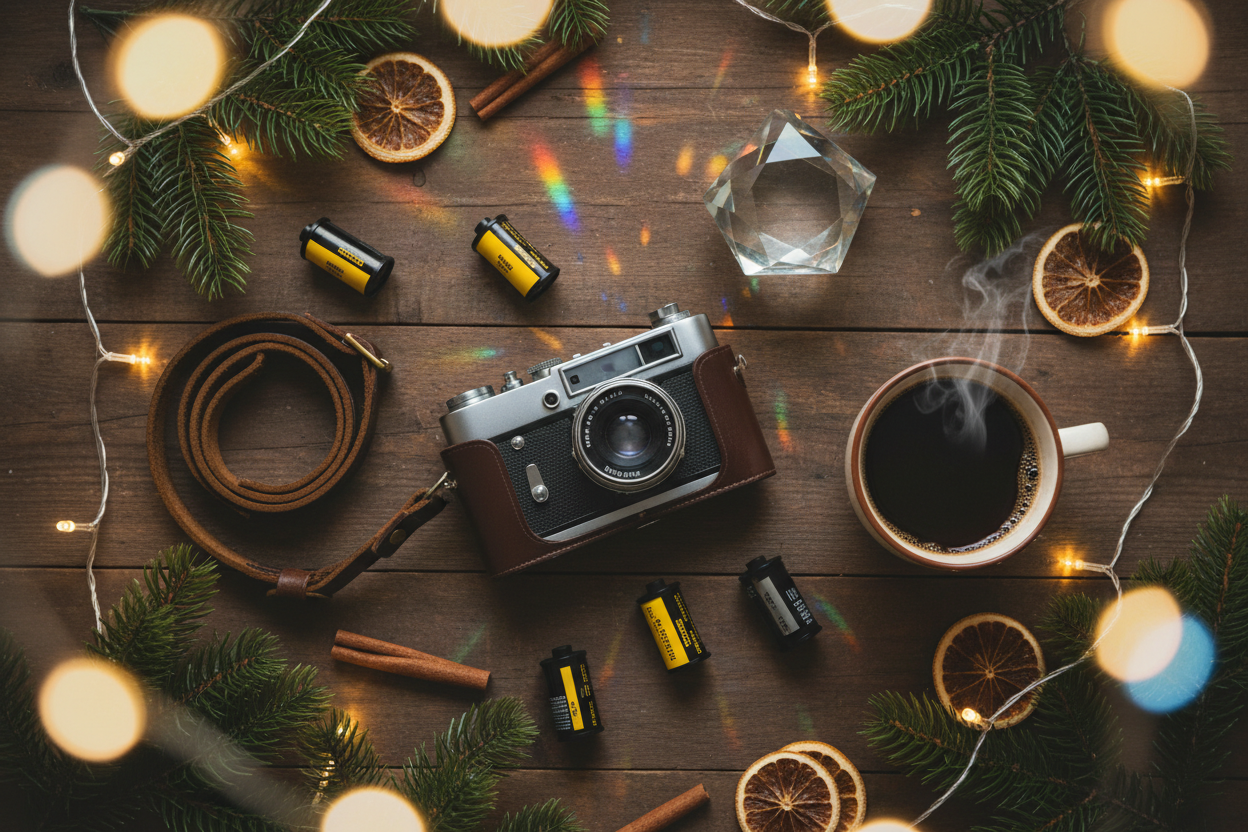
A cozy, photorealistic top-down view of a wooden photographer's desk during Christmas. The scene includes a vintage silver film camera, a few rolls of 35mm film, a glass prism reflecting warm fairy lights, a leather camera strap, and a steaming mug of coffee. The lighting is warm and moody, emphasizing the texture of the wood and the metallic sheen of the camera gear, with subtle pine branches and dried orange slices on the periphery.

There is a specific kind of anxiety reserved for the partner, parent, or friend of a photography enthusiast in December. You stand in the camera store—or stare at an online cart—paralyzed by specifications. Does she shoot E-mount or RF-mount? Does he need a variable ND filter or a polarising one? Why does a small piece of glass cost as much as a used sedan?


Let’s be honest: buying technical gear for a creative person is a minefield. If you buy the wrong lens, it’s a paperweight. If you buy a camera bag, it might not fit their workflow. This year, we are stepping away from the spec sheets. The best gifts aren’t always the ones with the highest megapixel count; they are the ones that reignite the spark of creativity.


For Christmas gifts for photographers 2025, the trend has shifted from heavy hardware to experiential tools. We are looking for items that make shooting fun again, items that solve the “creative block” rather than just upgrading the resolution.


The Analog Revival: Tangible Magic


If you have noticed more grain and imperfections in your Instagram feed lately, it’s not a filter. It’s the massive resurgence of film. In a world of instant AI generation, photographers are craving the slow, chemical process of analog photography. This is arguably the safest and most exciting category for gifting this year.


When looking for gifts for film photographers, think about consumables. Film is expensive, and a photographer will never be sad to see a fresh brick of 35mm stock in their stocking. You don’t need to know what camera they have; 35mm is the universal standard for most hobbyists.


Beyond just the rolls of film, consider home developing kits. There is a profound satisfaction in pulling a tank out of the chemicals and seeing images appear on the strip. It turns a bathroom into a darkroom and a hobby into a craft. If they already shoot film, look for a high-quality loupe (a magnifying glass for viewing negatives) or a digital scanner adapter that lets them digitize their negatives using their digital camera.


Breaking the Digital Clinical Look


Modern digital cameras are almost too perfect. The images are sharp, clean, and sometimes a bit sterile. Many enthusiasts are looking for ways to dirty up the frame, to add flair and character back into their work. This is where you find some of the most unique photography gifts for him or her—tools that bend light and alter reality without Photoshop.


Prisms and Fractals

Handheld glass prisms are fantastic stocking stuffers. By holding a prism in front of the lens while shooting, the photographer can create dreamlike reflections, hide distracting backgrounds, and bounce light in unexpected ways. It forces the shooter to slow down and experiment with composition.


Mist Filters

Another massive trend for 2025 is the “cine-bloom” or mist filter. These screw onto the front of the lens and soften the highlights, making streetlights glow and smoothing out skin tones. It gives digital footage a cinematic, vintage vibe instantly. While you do need to know the lens filter thread size (usually written in millimeters on the front of their lens, like ø67), it’s a small bit of detective work for a huge payoff in image quality.


Comfort Meets Style


Have you ever looked at the strap that comes in the box with a new camera? It is usually a thin strip of scratchy nylon emblazoned with a giant neon logo. It screams “steal me” and feels terrible on the neck after an hour of hiking.


Upgrading a photographer’s carry system is a problem-solution scenario that always wins. Look for seatbelt-nylon materials or full-grain leather straps. The focus for Christmas gifts for photographers 2025 is modularity. Photographers want to detach their strap quickly when they put the camera on a tripod. Look for systems that use quick-release anchors.


For the photographer who hates neck straps, the wrist cuff is a sleek alternative. It provides security against dropping the camera without the bulk of a strap dangling across the chest. It is subtle, stylish, and incredibly functional.


The Gift of Light


Photography is, quite literally, writing with light. Yet, many enthusiasts rely solely on natural light because they are intimidated by giant flash units. Portable, RGB LED tube lights have changed the game. These aren’t the bulky studio lights of the past; they are pocket-sized wands that can produce any color on the spectrum.


These are perfect for adding a splash of neon blue to a portrait background or lighting a macro shot of a flower. They are battery-powered, magnetic, and durable. It’s a toy that teaches them how to shape light, which is the most valuable skill a photographer can learn.


Education and Inspiration


Sometimes the gear isn’t the problem; the inspiration is. When the creative well runs dry, a new lens won’t fix it. But a beautiful coffee table book might.


Photobooks are timeless. Holding a physical print from a master photographer offers a level of detail and emotion that a phone screen can never replicate. Look for monographs from street photography legends or contemporary landscape artists. These books serve as a reminder of why they take pictures in the first place.


Alternatively, consider a subscription to an editing platform or a masterclass. The software side of photography is moving fast, and having access to the latest presets and tutorials can save them hours of frustration behind the computer screen.


Wrapping It Up


The best gift you can give a photographer is the permission to play. Whether it is a roll of experimental film, a glass prism to fracture the light, or a comfortable strap that encourages them to walk that extra mile, you are giving them a reason to pick up the camera.


Don’t worry about the megapixels. Worry about the motivation. If your gift gets them out the door and chasing the sunset, you have won Christmas.


If you are still hunting for that specific accessory or need to browse a wider selection of curated gear options to finalize your list, [check now] to explore more.

Mastering AI Photography: A Guide for the Modern Purist

split-composition close-up. On the left, a vintage analog camera lens with visible glass elements and mechanical aperture blades. On the right, the lens dissolves into glowing, ethereal digital voxels and data streams in teal and orange hues. The lighting is dramatic and moody, emphasizing the texture of the metal against the sleekness of the digital abstract. 8k resolution, photorealistic style

Mastering AI Photography: A Guide for the Modern Purist

Remember the agony of missing focus on the perfect portrait? Or the sinking feeling when you realized your ISO was too high, turning a beautiful night scene into digital oatmeal? For decades, these technical limitations defined our craft. If you didn’t nail the physics, you lost the shot.

That era is over.

We are currently witnessing a massive shift in how images are created, processed, and consumed. It isn’t just about robots taking over art; it is about extending the capabilities of the human eye. This guide is designed to help you navigate the surge of AI photography, integrate these tools into your workflow, and maintain your artistic integrity in a world of algorithmic perfection.

The New Paradigm: Computational vs Traditional

To master this new medium, you must first understand the fundamental difference between computational photography vs traditional photography.

Traditional photography is the art of capturing light. It relies on optics, sensor size, and physics. You are limited by the glass in front of your sensor and the light available in the scene.

Computational photography, however, is the art of processing data. It relies on algorithms, machine learning, and stacking multiple exposures instantly. When you take a picture with a modern system, the camera isn’t just recording one moment; it is analyzing the scene, identifying the subject, separating the background, and often combining data from several frames to reduce noise and increase dynamic range.


This doesn’t mean you should throw away your prime lenses. It means you now have a second darkroom—one that lives inside the processor.

Step 1: Rethinking the Capture

Integrating AI starts before you even open your editing software. It changes how you shoot.

Shoot for Data, Not Just Light

In the past, we exposed perfectly for the mid-tones to avoid noise. With modern AI denoising tools, you have more latitude. You can now prioritize shutter speed to freeze motion in low light, knowing that AI can reconstruct the details in the shadows later without the artifacts that used to plague high-ISO images.

Embrace the “Wide” Shot

Generative cropping is real. If you are unsure about the composition, shoot slightly wider. High-resolution sensors combined with AI upscaling allow you to crop aggressively in post-production while maintaining print-quality resolution. It gives you compositional flexibility that film never could.

Step 2: The Smart Culling Workflow

Before you edit, you have to select. This is historically the most tedious part of the job, but AI assistants have changed the math.

Instead of manually reviewing 2,000 wedding photos, use AI culling software. These tools analyze focus accuracy, subject eye-openness, and exposure. They can group duplicates and flag the best version of a burst sequence instantly.

Action Step:
– Import your raw files.
– Set your AI culling parameters (focus strictness: high).
– Let the software run while you grab a coffee.
– Review the “rejects” quickly to ensure no artistic accidents were tossed out.

Step 3: The Edit and the “Best AI Photo Editor 2025” Dilemma

Searching for the best AI photo editor 2025 yields overwhelming results. The market is saturated. However, the goal isn’t to find a tool that does everything for you, but one that handles the tedious tasks so you can focus on color and mood.

Masking and Selection

Stop manually brushing masks. Modern editors can detect “People,” “Sky,” “Background,” and even specific facial features like “Teeth” or “Iris” automatically.

How to use it:
1. Select your subject automatically.
2. Invert the selection to darken the background slightly (simulating light fall-off).
3. Select facial skin and apply a gentle texture softening—keep opacity low (around 15%) to avoid the plastic look.

Generative Fill and Removal

Removing a trash can from a street photo used to take twenty minutes of cloning. Now, it takes four seconds.

The Golden Rule: Use generative fill for distractions, not for invention. Removing a stray power line improves the photo; adding a moon that wasn’t there changes the reality. As an enthusiast, draw your own line on ethics, but be transparent about it.

Step 4: Preserving the Human Element

The danger of AI photography is homogeneity. If everyone uses the same “Golden Hour” filter, every portfolio looks the same.

– Don’t over-smooth: Noise and grain add texture and feeling. Sometimes, a perfectly clean image feels sterile.
Color Grade Manually: Let AI handle the technical cleanup (noise, sharpening, masking), but keep the color grading manual. Your color palette is your signature.
Curate Imperfection: Sometimes the slightly blurred motion or the lens flare is what makes the image emotional. Don’t let an algorithm “fix” the soul out of your work.

Conclusion

AI is not here to replace the photographer; it is here to retire the technician. By handing over the noise reduction, masking, and culling to algorithms, you buy back time to focus on what actually matters: composition, storytelling, and connection with your subject.


The future belongs to those who can treat these algorithms as tools, not crutches. So, update your firmware, explore the new software, and keep shooting.

Rates by ExchangeRate-API