
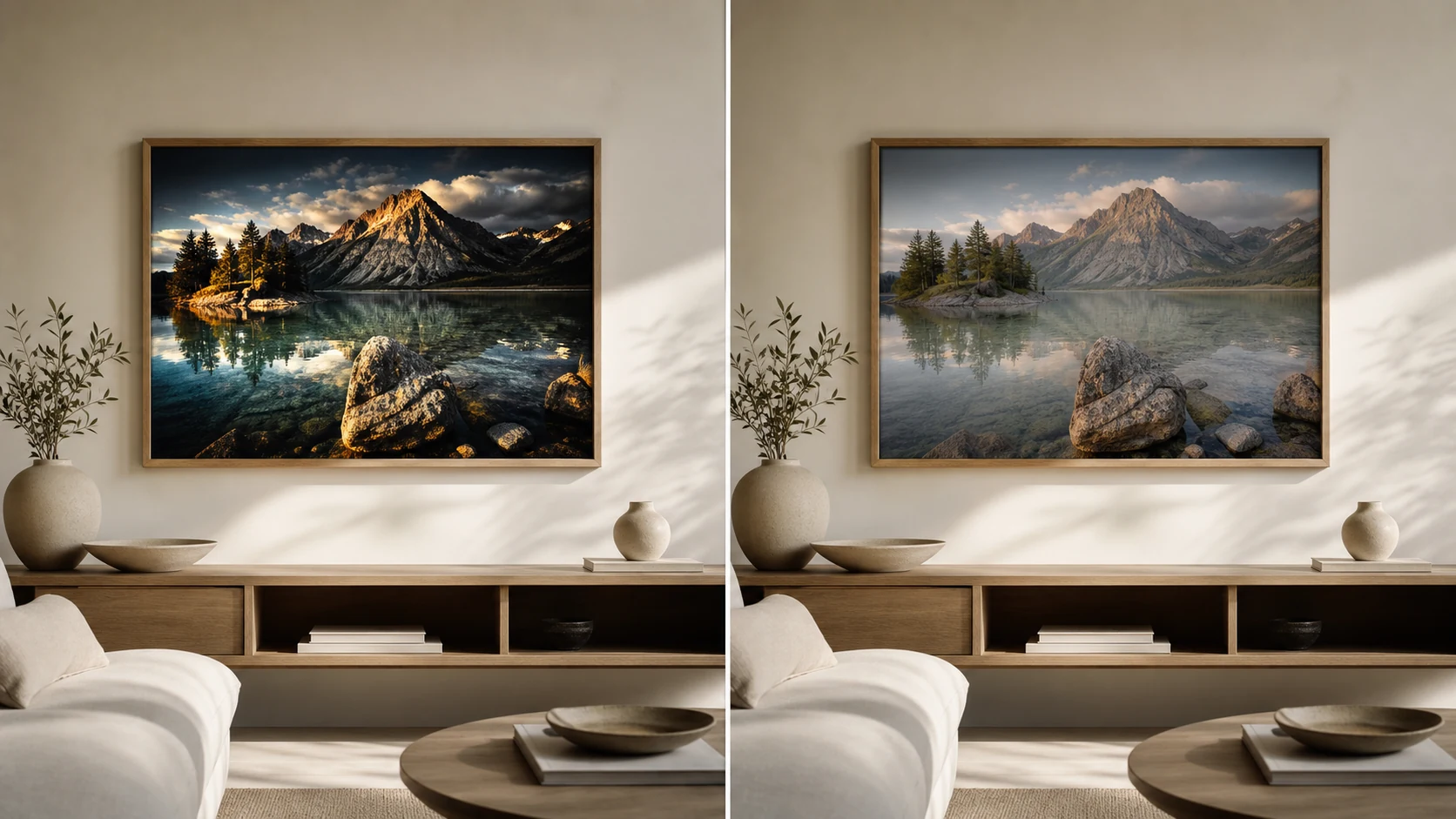
Preparing a photo for print is not about pushing every slider until the image looks dramatic. It is about making the file calm, clean and strong enough to become physical.
Start with the final size
A photo should be prepared for the size it will become. A file for a small desk print does not need the same tolerance as a large framed piece above a sofa. Cropping, sharpening and noise all become more obvious as the print gets larger.
Do not over sharpen for paper
Sharpening can make a photo look crisp on a screen, but too much of it creates harsh edges in print. Architecture can start to look brittle. Landscapes can lose their softness. Portraits can become unkind.
Keep the tones believable
Many disappointing prints are not technically broken. They are simply pushed too far. The blacks are crushed, the highlights are thin, or the colours are more intense than the subject can carry.
A simple pre-print checklist
Check the crop
Make sure the chosen print size does not cut away important edges.
Check the dark areas
Important shadows should still contain shape and separation.
Check the file source
A file saved from social media is usually weaker than the original export.
The goal is not perfection
A good print still feels like a photograph. It should have texture, atmosphere and some restraint. The preparation should support the image rather than make the editing visible first.
See how finished prints are presented on the site
A good print should feel considered before anyone notices the technical choices behind it.